Tesla has Powerwall, Renault has Powervault.
French automotive manufacturer and leading electric vehicle marque Renault will soon be repurposing used batteries from its EVs into home power storage systems with home energy company Powervault. This will see the latter company able to market its home energy storage solutions at prices up to 30% lower than equivalent systems in the UK. With this cooperative effort, Powervault expects these “second life” power packs to start at around £3000 (or about $5,100), about £1000 (or $1720) lower than it would be with new storage cells.
With an initial run of 50 second-life Powervault packs planned, the company will be installing these repurposed energy storage systems in residences, schools, and customers of M&S Energy. Renault and Powervault intend to roll out these prototype models to gauge performance and feedback toward the technology, compared to similar units using brand-new power storage cells.
Renault is particularly excited by the whole thing, saying that the repurposing would endow their EV batteries a lifespan double that of what it currently sees, with half of its life serving mobility and the other half serving green energy. Eight to ten years is the expected lifespan of an EV battery, whereas the Powervault could see the same battery packs survive for another eight to ten years.
A Powervault spokesperson shed some light on the recycling process: "The batteries are taken back by Renault dealers and removed from cars. Then the car packs are taken apart and the 48 li-ion battery ‘modules’ within it are tested and graded. Those over 70% of their original state of health are then repacked into smaller portable battery packs by Powervault.”
“Each pack,” the spokesperson continued, “is 8 modules which gives 2.5KWh of battery capacity. One, two or three of those packs can then be fitted into a Powervault unit in a customer home. Any modules which are below 70% state of health may be found other ‘second life’ homes or recycled responsibly.”
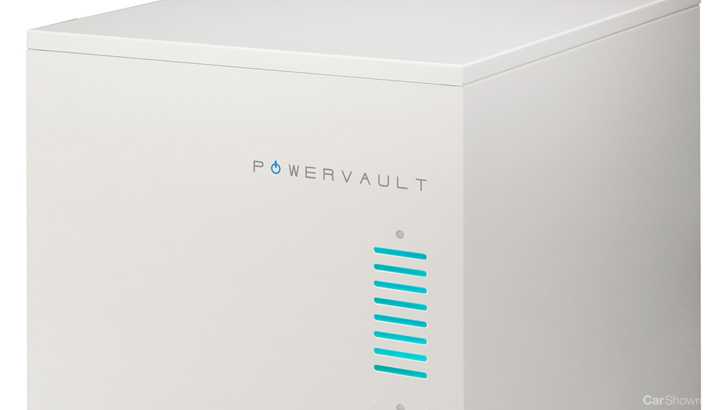
This is a great way to extend the life of EV batteries, and it helps address the issue of what to do with them once they’ve served their purpose powering cars. Hopefully this will spur similar efforts from other EV and PHEV manufacturers, as this may massively reduce the buy-in price of domestic power storage solutions for consumers around the globe.


