Mitsubishi, resurgent after being integrated into the Renault-Nissan Alliance, is keen to project their newfound stride to the world. And where better to do that than at the Tokyo Motor Show, the largest of its kind for a country steeped in the automotive industry and culture.
As the world watches, Mitsubishi breathed much needed new life to one their most recognisable and storied nameplates: Evo. We remember Lancer Evolutions of days past being an all-wheel drive, heavily turbocharged, surgically accurate four-door supercars that was the closest thing to a full-fledged WRC rally car that a mere mortal could hope to own and drive without an death or an embarrassing injury ensuing.


Even today, they are considered formidable presences when encountered on the road. Spot one in your plush but fast M tuned BMW or AMG Mercedes sedan on the road, best think long and hard about how seriously that driver takes concealed performance before taking it on.
The last version, the Evo X, and based on the 10th-generation Mitsubishi Lancer ceased production in May 2016 without the marque - then plagued by what is in our opinion an unfairly over-publicised fuel consumption scandal that saw consumer confidence fall in its home market of Japan and stock take a tumble. Following that was when Renault-Nissan stepped in and talks of a partnership began in earnest.


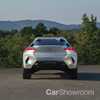
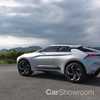
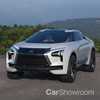
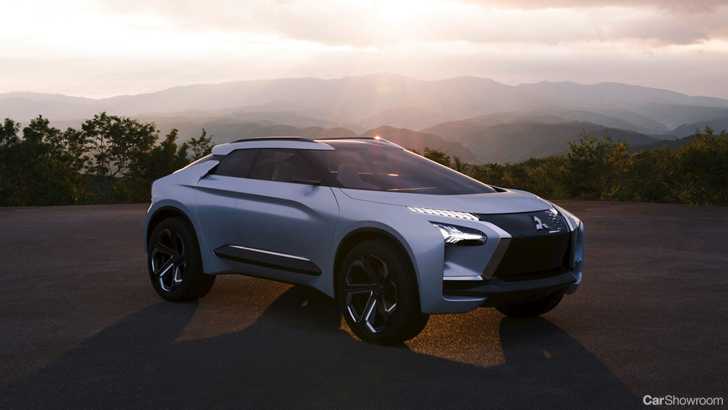
Plainly, this e-Evolution concept is nothing like the previous Lancer Evolution; teetering on the edge of being able to be stand up as a worthy recipient of the prestigious name - at least on its face. Like it or not, the SUV is the most popular - and therefore most profitable - category of car at the moment, and it’s certainly understandable that Mitsubishi is going where the money is following the year it had.
Despite having a comparatively high ride height over their rally-bred sedan as well as an fully electric powertrain, the e-Evolution concept stuffs in as much ‘Evo’ tech as it can to compensate. In fact, the nature of the instant power delivery afforded by electric motors makes the kind of surreal traction and directional response the Evos were famed for.


In fact, three motors power the e-Evolution - one driving the front axle and the remaining pair allotted to each rear wheel that effectively gives it traction at all corners as well as allowing engineers to iterate on their S-AWC permanent all-wheel drive system, or Super All Wheel Control. This time, though, rougher and less linear uneven terrain won’t bother it like the more ground-hugging Lancer-based Evolutions.
The styling, while dramatic with its angularity, clearly seeks to mind a comfortable midpoint between sports car crossover. As a result, it can come across as somewhat cluttered and unfocused. Still, that’s better than being visually bland.
The Japanese automaker sees the Evo name branching out quite a bit, as this new concept attests to, breaking loose of the single-model iterative pattern that have defined up until now. Perhaps the ‘Evo’ would be used similarly to how Honda uses Type R or how Subaru attaches ‘STI’ to their more performance-oriented model variants.
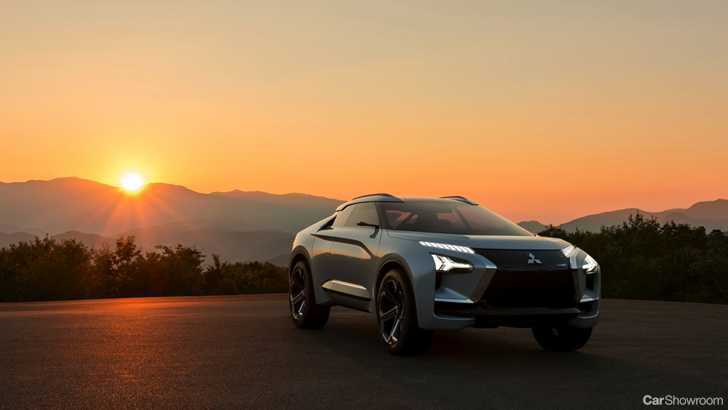
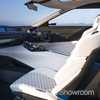
With the e-Evolution concept, however, clearly Mitsubishi also wants us to get used to that moniker being associated with future-facing technologies such as fully electric powertrains and autonomous driving capabilities. It’s awfully fortunate that Nissan and Renault both have some very impressive innovations (to say the least) on those fronts.
For more on Mitsubishi vehicles, check out our Showroom.