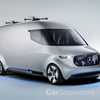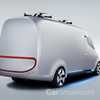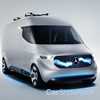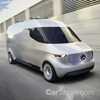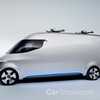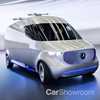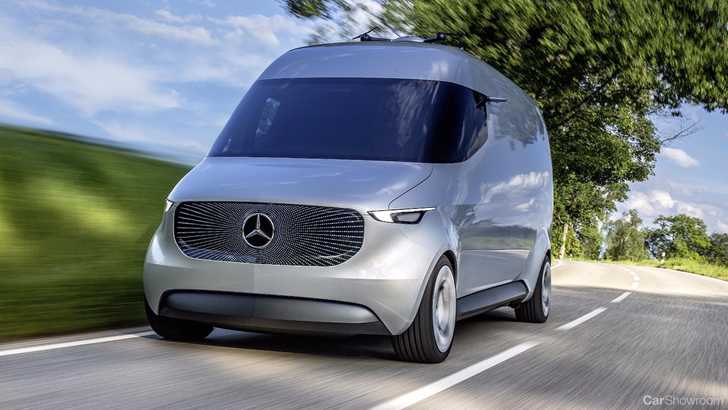
Mercedes-Benz has launched what can be described as an off-character vehicle that they are not quite branding as a concept but rather is their interpretation of solving the ‘problem’ of door to door deliveries.
Called the Vision Van and due to be fully unveiled later this month at the 2016 Paris Motor Show, the vehicle is part of Mercedes-Benz Vans’ strategic future initiative called adVANce that intends to solve a problem they see as imminent, taking into consideration new technologies, social trends, and an ever pervasive internet as well as cheap computing power.
They’ve invested approximately 500 million Euros over the next five years on exploring the challenges that would effect the commercial vehicle industry, and this Vision Van will be the first tangible result of their postulations.
Volker Mornhinweg, head of Mercedes-Benz Vans, said: "To live up to the dramatic changes in our sector, we adapt our 'Mercedes-Benz Vans goes global' strategy and expand it beyond the product and untapped international markets. We are focusing our attention beyond the vehicle on the entire value chain and business environment of our customers,”
“We provide transport solutions for the digital age and evolve the van into an intelligent, interconnected data centre on wheels. In order to do this, we are investing around half a billion euros over the next five years, and we created a separate organisational unit. So far, this approach is unique within the van sector.”
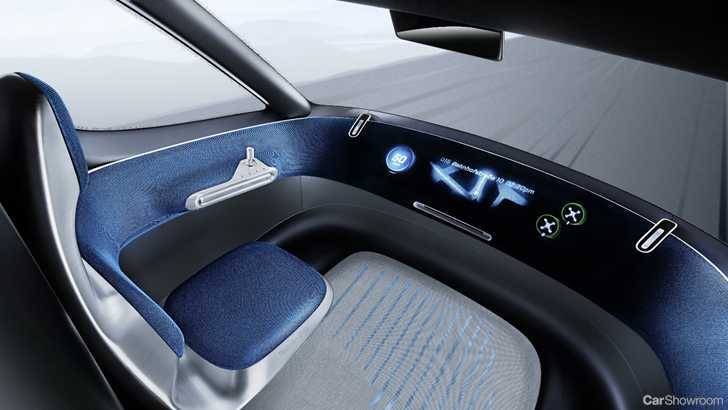
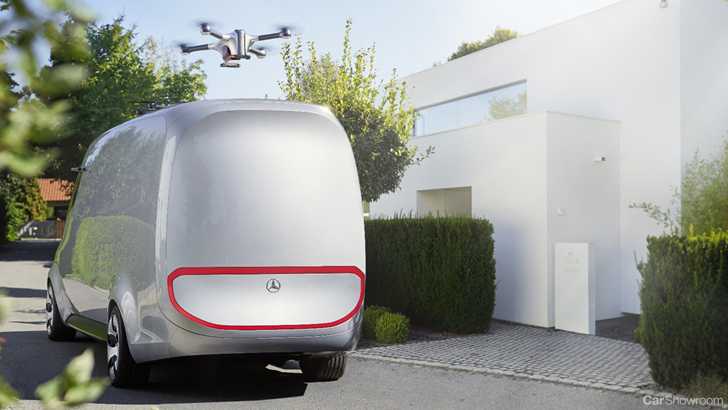
The Vision Van is all electric that’s designed and engineered specifically to excel in providing an innovative solution to ‘last-mile’ delivery in urban and suburban environments. Without delving too deeply on the exact mechanics of how it goes about its task, the Vision Van is the transparent bridge between distribution centre and consignee.
It just happens to be a fully autonomous, electric powered, drone spawning van from a sci-fi future.
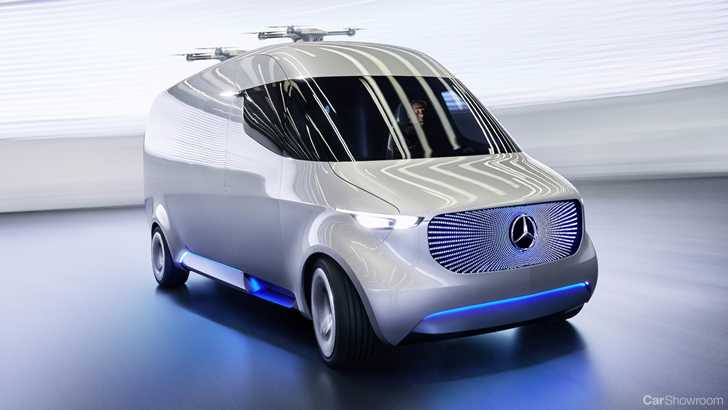
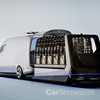
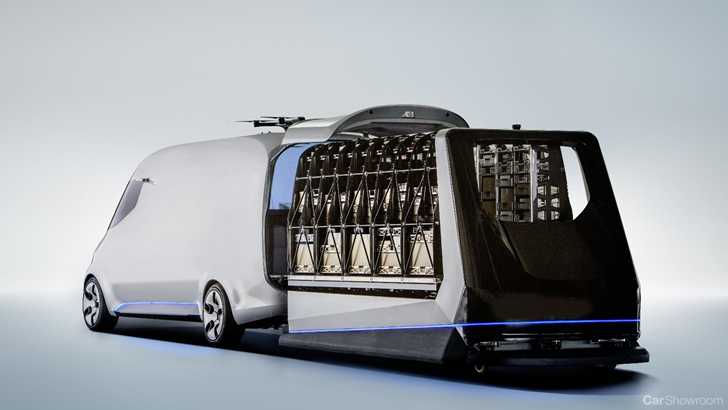
A service provider can stop vehicle in a dense urban residential area, for example. A parcel would be stored in its space-efficient bays location in the bulkhead, which then can be dispatched via drone to nearby consignees autonomously by air - even if they’re not at home.
This would greatly reduce the need for a manual delivery by said service provider’s personnel and would enable simultaneous deliveries to take place at once, deployed from a single source.
Mornhinweg continued: "With the Vision Van from Mercedes-Benz Vans we provide an idea of future generations of vans: the intelligent automation technology connects the entire process, from loading and transportation by road through to delivery to the consignee. This makes it easier for the deliverer to do business and rapidly reduces the delivery time for end customers.”
"Equipped with an electric drive system, the Vision Van not only operates locally emission-free, it also moves almost silently. This means that it can be operated in cities even during times when there are traffic restrictions or for late-night deliveries in residential areas. This gives our customers the possibility of offering new services to their customers.”
For propulsion, Vision Van uses a variable output electric motor that, under normal circumstances, delivers 75kW and 270Nm but for 60 second intervals can summon up to 150kW for situations that demand quicker acceleration.
Being a delivery vehicle, that need would be comparatively rare to normal passenger cars. As such, the typical top speed would be limited to 80km/h but can be raised to 120km/h if needed, with range configurable to a maximum of 270km.
For more on Mercedes-Benz vehicles, including pricing and specifications, check out our Showroom.