Another year, another season of Formula 1. Like it has for a while now, the opening race is to take place this weekend around Albert Park in Melbourne. And much akin to that bit of clockwork, it’s a Mercedes-AMG that will lead the pack of open-wheelers before the 5 lights go out and the racing begins.
This year, like the last one since 2015, an AMG GT has been given the honour of being the sport’s official Pace Car or Safety Car, continuing a tradition that stretches 23 years back to 1996 with the C 36 AMG. However, 2018 will see the introduction of hardcore GT R variant.
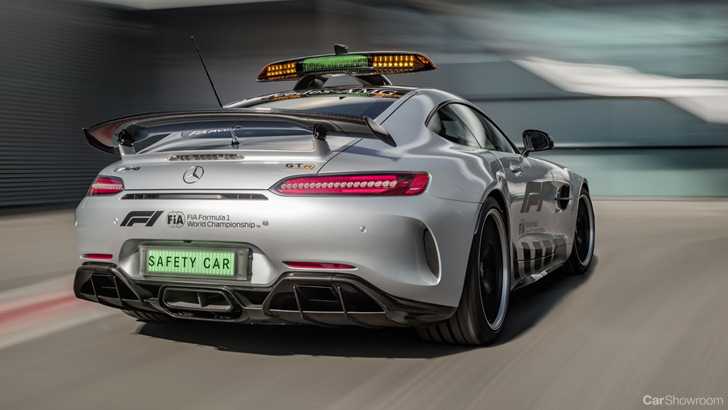
Unsurprisingly, with its more powerful 430kW version of the 4.0-litre twin-turbo M178 V8 engine, it’s actually the most powerful Pace Car that’s been used in F1. The go-faster tech that’s been packed into the GT R covers much more than just its uprated engine, however, and includes an extensive weight loss programme and advanced aerodynamic improvements.
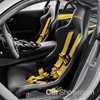
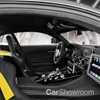
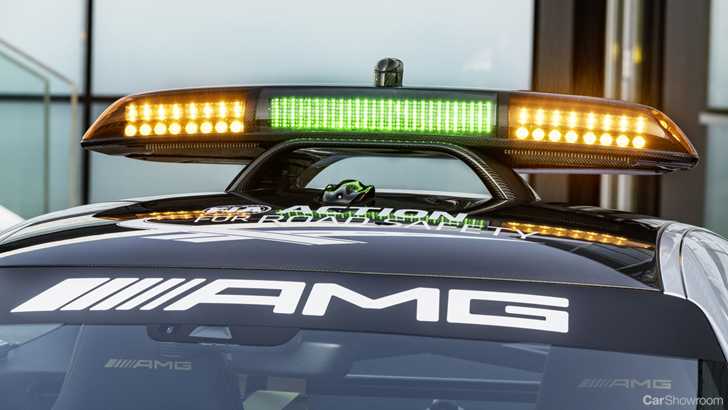
Before the GT R can be certified for Pace Car duties, though, it has to conform to the standards set by the FIA, leading to some clear differences between these and the series production version. Of course, the exterior finish has been altered to reflect the F1 livery, but there’s also the light bar on the roof that integrates with a carbon fibre air scoop aerodynamically optimised to offer the least resistance to the rear aerofoil.
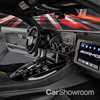
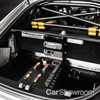
Inside, the GT R includes advanced telemetry equipment that occupies the boot while the two iPads - one showing the live international TV broadcast and the second can feature either an animated display of the current position of the vehicles or show current lap times. Specific software and hardware are used to relay the information to both the driver and co-driver in order to maintain communication with race control.
Charlie Whiting, FIA F1 Director, says: “When a Safety Car intervention is required during a Grand Prix it’s vitally important that we have full confidence in the car’s ability to lead the Formula 1 cars around the track safely. That means we need a car which is not only capable of dealing with the extreme demands a Grand Prix circuit puts on a vehicle travelling at high speed, but also one which is capable of setting a pace that allows the F1 drivers to keep tyres and brakes working at the right kind of temperature so that they do not struggle while waiting for racing to resume. With the latest versions of the FIA F1 Medical and Safety Cars, that confidence is once again assured.”


Working with the new Safety Car is the Mercedes-AMG C 63 S Estate, reprising its role as the official Formula 1 Medical Car. It too is fitted with many of the same telemetry and wireless communication hardware, but its the 490-litre boot that is critical to transport the full complement of emergency equipment, including a respirator and defibrillator, to the scene in the event of an incident.
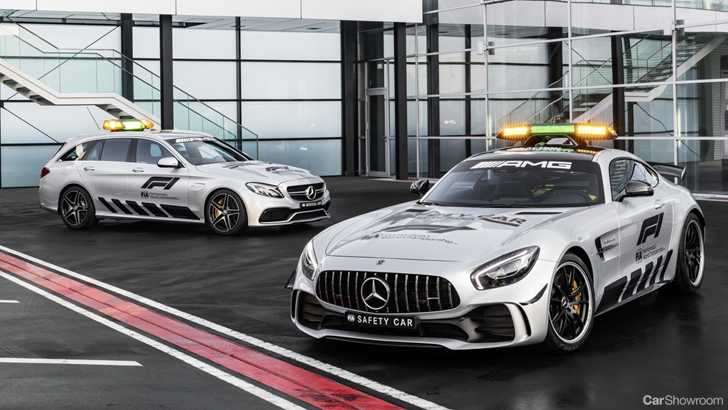
The C 63 S Estate is powered a very similar engine to the AMG GT R, but its V8 bi-turbo’s output sits at 375kW and mated to a 9-speed automatic transmission. In addition, it features dynamic engine mounts and an electronic limited slip differential, making it one of the quickest wagons out there right now.
For more on Mercedes-AMG cars, check out our Showroom.