There’s a long life ahead of them yet, at least in Sant’Agata.
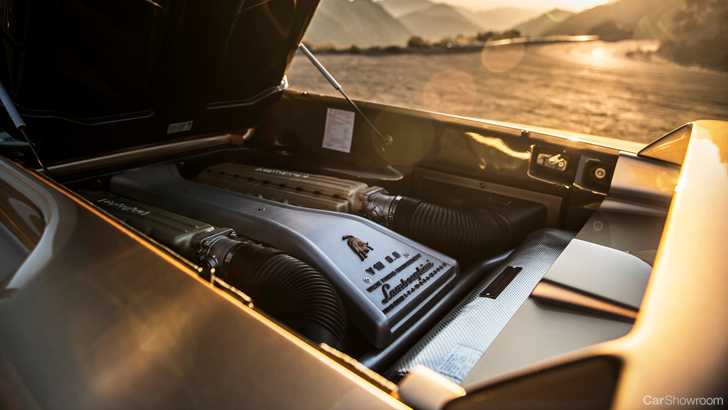
There’s no denying that cars produced by hallowed Italian manufacturer Lamborghini are distinctive, to say the least. Critics have long considered them to be some of the most stylish cars on the planet, putting them ahead of the competition in the number of poster-pinups. It’s part of the Lamborghini DNA, that style. But so is the soundtrack.
The dramatic lines and proportions of a Lamborghini are worthless without its sound, usually supplied by a roaring V12 or a screaming V10, neither of which feature any form of forced induction. That lack of forced air means there’s a linearity in both the power and the tone, with the sound of the engine unencumbered by the uncouth noises that come from a turbo or supercharger (like waste-gate noise, or whining). There’s a purity to the Lamborghini noise, and that’s something that R&D director Maurizio Reggiani wants to maintain for as long as possible.
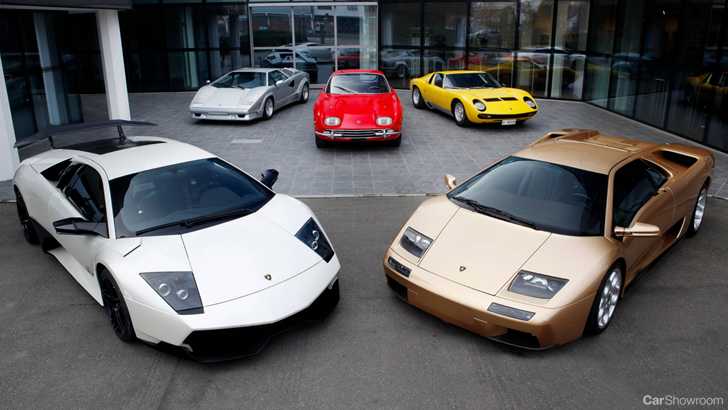
Lamborghini is presently the only supercar manufacturer that hasn’t bowed to the norm of fitting a turbocharger, and so far has little plans to integrate electrified powertrains into its range the way McLaren and Ferrari have already. This is adherence to Lamborghini’s DNA, in providing a “unique” driving experience. Speaking to Autocar, Reggiani had this to say:
“Our DNA is the design, emotion, and performance to make the experience of the car unique. These are conditions that define a new car. We then try to put them in a more scientific way, making them ‘physical’ things so you can compare a new one to an old one, or to the competition.” — Maurizio Reggiani, Research & Development Director, Automobili Lamborghini s.p.a
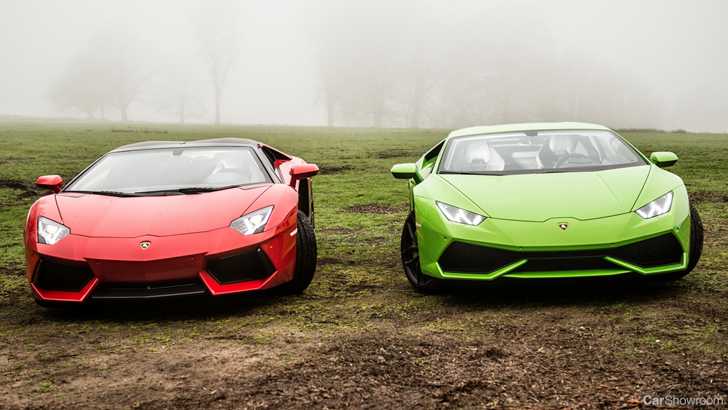
In order to keep up with tightening emissions, something has to be done about the average CO2 output that Lamborghini’s spew. Rather than ‘compromise’ one of its existing models, the firm will be pinning its hopes onto its latest model, the Urus SUV, to bring about the ecological gains needed for the firm to stay compliant. The Urus will come as a bi-turbo V8 at launch, while 2020 will see the introduction of a plug-in hybrid variant of the high-rider. Those powertrains will allow the Huracan and Adventador to remain in their atmo states, which is exactly as Reggiani wants them.
“It can have a magnificent design as a super-cool Lamborghini but, if the car can’t do ‘emotional’ when you sit in it — if you can’t hear the noise or feel the tyres — then the job is not done. We try and perfect this every time. Brand value is something for Lamborghini that is full of emotion. If we are not able to be emotional, there is no reason to buy a Lamborghini. The future must have passion. Our brand in the future must cause people to dream — the sound, speed, acceleration, design.” — Maurizio Reggiani, Research & Development Director, Automobili Lamborghini s.p.a
“The packaging of the batteries and the weight is less strategic than on a super-sports car [in the Urus SUV]. We start with the Urus, and then our dream of light weight [electrification hardware] can be ready. Today, we are not able to provide this [electrification] technology to a super-sports car in terms of performance, weight, and packaging. For PHEV tech,the supplier must make another big step for the weight and packaging. There cannot be compromise in this car. I wish the next-generation of super-sports cars to be served by tier-one suppliers for the battery and electric engine.” — Maurizio Reggiani, Research & Development Director, Automobili Lamborghini s.p.a
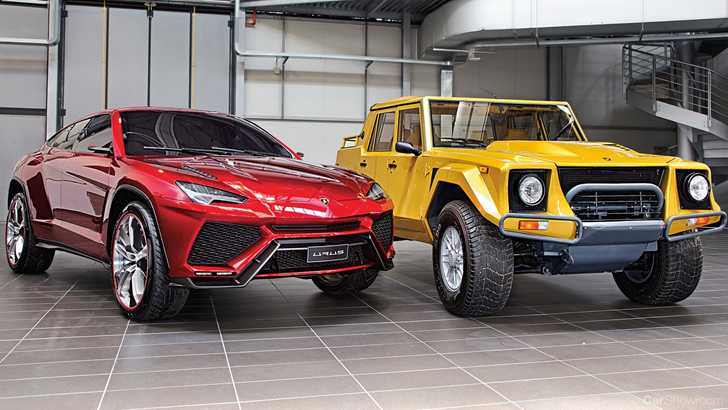
The Urus SUV will be shown in full before the end of the year, with first deliveries slated for Q1 2018, and will be the very first SUV for the marque since the LM002 from the 1980s. This return to high-riding vehicles is due entirely to the rise in popularity of ultra-luxury models, a trend that Sant’Agata has no intention of ignoring. The Urus promises to be more than just another luxury SUV, offering true Lamborghini performance and a true Lamborghini experience, or so it’s promised by the R&D boss.
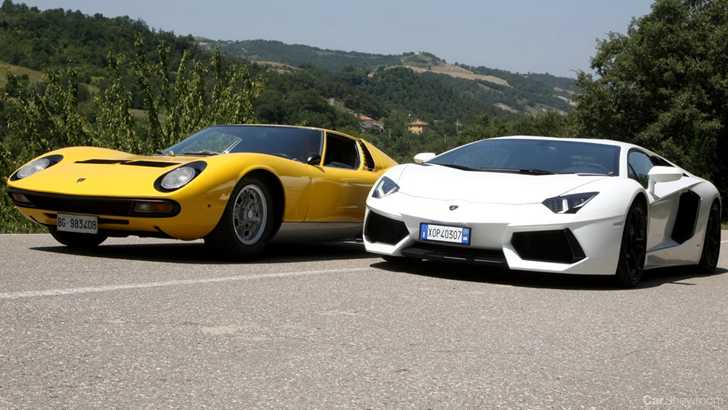
To ensure that future, electrified Lamborghinis live up to the expectations set by predecessors, the company has actually teamed up with the Massachusetts Institute of Technology (MIT) in Boston to research and develop why they’re calling as the “super-sports car of the third millennium,” focused on lightened, leaner electrification models and technologies that can be more easily integrated into cars that aren’t all that far away.
Reggiani’s opinions on the subject of atmo-engines are music to our ears, as will undoubtedly be the soundtrack of future Lamborghinis for as long as he has his way. His wish, he concludes, is for them to be around for as long as possible, as it’s “part of the DNA of a super-sports car. No other type of engine can provide the emotion, response, and sound — and that makes the difference today for Lamborghini.”
For more information on Lamborghini, check out our Showroom.