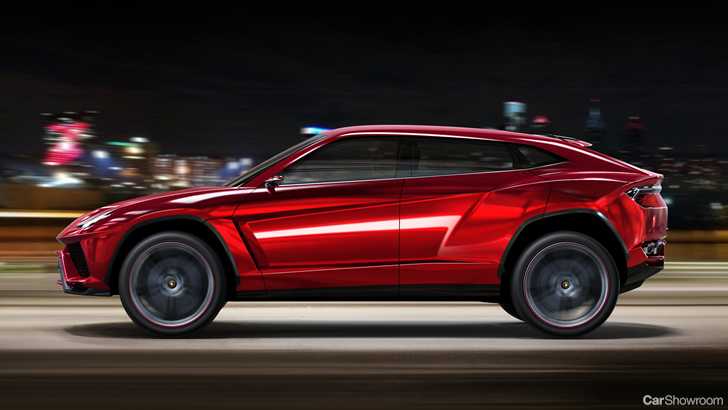
It’s been over 5 years since Lamborghini unveiled that original concept car called the Urus, a name that stuck with the marque ever since. From the peaks and valleys that would personify its journey from curious Italian oddity at the Beijing Motor Show to imminent production model, only now have they chosen to officially lay claim to that nameplate, according to an Autocar report.
If true, the timing does beg the question as to why they chose to file for a patent on that name so late into the game. Granted, with a moniker this unique and this public-facing, nobody would’ve stolen it away lest they wanted to unwittingly invoke the supercar-maker to the conversation.
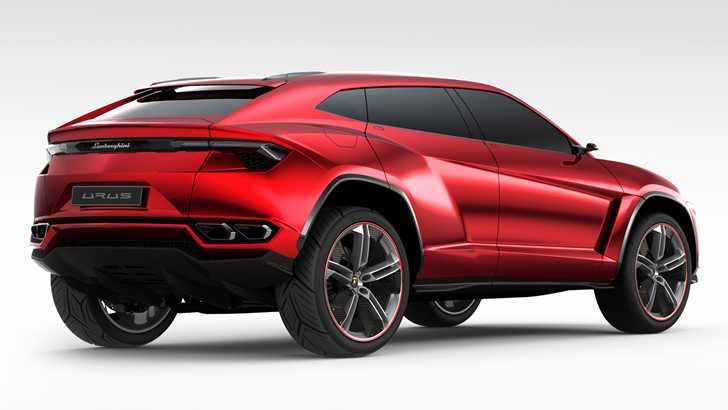
We’re just months away from a full reveal of Lamborghini’s first modern SUV (depending on how you classify the LM002 from the 1980s), which is believed to bear many of the same sharp design cues first seen in the 2012 concept, with a 4.0-litre twin-turbocharged V8 engine mounted up front that sends drive to all four wheels. Addition shove is provided by an as-yet undefined plug-in hybrid setup.
Luckily for Lamborghini, their ownership under Audi grants them access to the technical knowledge pool responsible for some of the best premium (often fast) SUVs ever assembled. Indeed, the Urus will ride on underpinnings that link it to the Porsche Cayenne, Audi Q7 and Bentley Bentayga. The latter two of those also share the same motor and only the Bentayga so far lacking a hybrid variant, though that’s reported to break cover before the end of 2017.
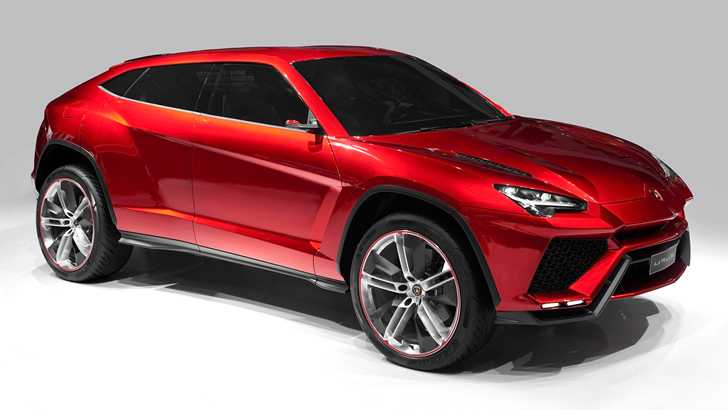
The Urus, if the very idea of a high-riding Lamborghini that isn’t mid-engine or has vertically hinged doors wasn't enough, is in many ways the most radical departure from the norm the company has ever undertaken. Aside from that, the Urus’ engine would make it the first production Lamborghini to use a turbocharged engine, let alone a turbo V8, let alone one that’s also augmented by an electric motor.
Autocar confirms that every Urus will be fitted with an all-wheel drive system, and there are no current plans to offer a rear-driven option as measure to bring costs down, improve handling, or to improve its power-to-weight ratio.
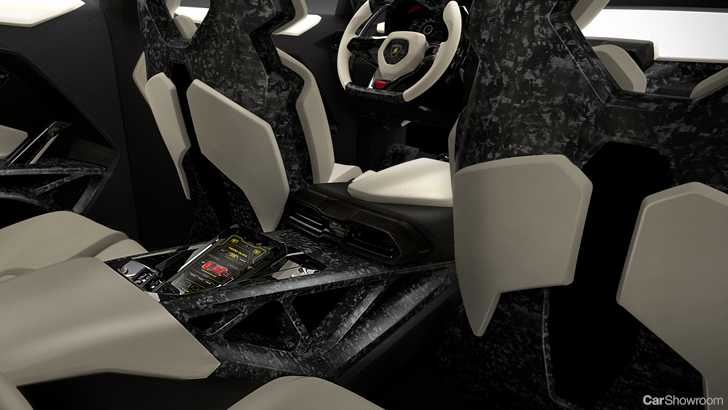
Where the production Urus will differ the most from how the car was first presented all those years ago on that gleaming Beijing show floor is the interior. Lamborghini originally took far more liberties with how dramatic they could fashion an SUV cabin with their famously outlandish styling sensibilities, but the upcoming launch-ready car slated to be shown at this year’s Frankfurt Motor Show will have one that places a larger emphasis on comfort, ergonomics, and practicality to a degree we’ve not seen from the a Raging Bull emblem.
With so many fast, luxury SUVs under the Volkswagen Group, Lamborghini will need to pull something quite special out of the bag to entice buyers who are spoiled for choice. A unique naturally aspirated powertrain and outrageous styling are typically the main reasons buyers are drawn to a Lamborghini to the exclusion of its would-be rivals. With the Urus, a car that’s more technically derivative than any Lamborghini in recent memory, those same USPs no longer seem to apply.
Still, in terms of aesthetics, the Urus could prove to be a fitting complement to the more rounded design of Porsche’s Macan, and the sheer angularity of its exterior should prove much more effective at masking its size, a reversal of the impression most people had of the most recent VW Group premium SUV, the Bentley Bentayga.
For more on Lamborghini, check out our Showroom.


