Infiniti, or rather Nissan under their luxury sub-brand, has premiered an all-new turbocharged 2.0-litre four-cylinder engine with variable compression ratio technology. The engine is dubbed VC-T, with the unit being able to offer impressive petrol engine power with the fuel efficiency and torque of an advanced turbodiesel.
This new capability makes it the world's first production-ready variable compression ratio engine – a combustion process that has been in development by many different manufacturers for years but until now has yet to be made widely available in passengers cars.


Roland Krueger, president of Infiniti Motor Company said: “VC-T technology is a step change for Infiniti. It is a revolutionary next-step in optimising the efficiency of the internal combustion engine. This technological breakthrough delivers the power of a high-performance 2.0-litre turbo gasoline engine with a high level of efficiency at the same time.”
The main advantage that this VC-T engines bring is significantly improved fuel efficiency as the engine is able to vary the engine's compression ratio on the fly (meaning it can raise or lower the height the pistons reach), increasing or decreasing it based on the driving conditions and required power. Typical engines with a fixed ratio use require a constant fuel inflow per combustion cycle regardless of whether the car is in at idle, in a cruise, or accelerating.


Infiniti says that the new engine can vary anywhere between a compression ratio of 8:1 (for higher performance) and 14:1 (for higher efficiency), reducing fuel consumption as well as overall carbon emissions as well as reduced noise and vibration levels.
The new engine will be making its full debut at the Paris Motor Show in late September, although it's unlikely that we will be seeing it fitted to an actual car by that point as Infiniti is more interested in it being a technological showcase for now.
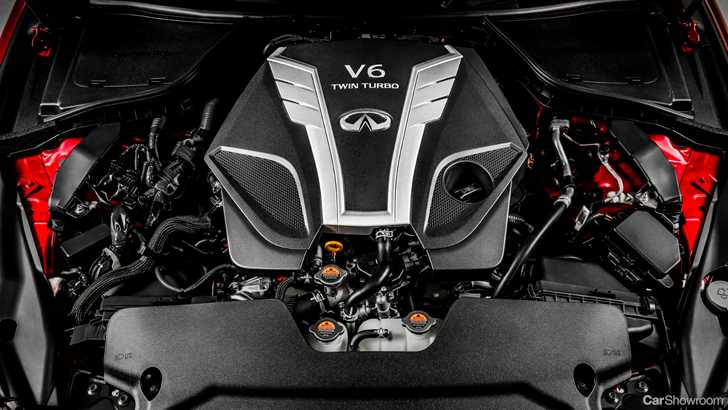
They say that the new four-pot engine will be comparable in power to 'certain' six-cylinder petrol engines, although those are likely to be naturally aspirated units. It's unlikely that it can match the twin-turbocharged V6s that Infiniti uses in its more powerful cars, for example. However, because it is capable variable compression ratios, it will very likely beat any other leading 2.0-litre turbo engines for real world fuel economy and emissions output. We won't be surprised if Infiniti revamps their entire engine line-up to include variable compression further down the road, never looking back to fixed ratios, and will eventually trickle down to Nissan vehicles as well as possible Renault cars through their corporate alliance.
Despite touting them as being 'production ready', the premium Japanese marque say that they will be slotting these new line of engines into production models starting in 2018. It's probably just as well as Infiniti is treading new ground with mass produced variable compression ratio engines here, and the landscape is littered with the previous efforts to harness this technology for widespread use that ultimately failed or sidelined due to the sheer complexity and reliability issues of the adjustable pistons height.
For more on Infiniti vehicles, including pricing and specifications, check out our Showroom.