More hot air from motoring's favourite hypemasters.
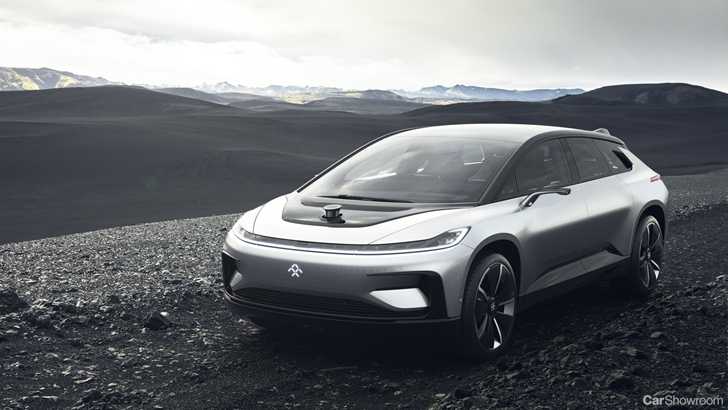
After a semi-successful showing at the 2017 Consumer Electronics Show (CES), embattled EV manufacturer Faraday Future today announced it's latest 'success,' in that they managed to rack up more than 64,000 orders for their FF91 ("nine-one") "production car." And though this may be seen as real progress from a company that's made headlines more often for moving backwards than forwards, closer inspection reveals that there's little substance to their achievement.
At the launch of the FF91, senior vice president of R&D and engineering Nick Sampson excitedly announced that FF's first production car was open for reservations, and then quickly followed that by mentioning that the US$5,000 deposit was "fully refundable." However, it was clarified later to the media that not all reservations require that deposit, as putting money down secures a "high-priority" reservation. To clarify further, that means that FF has not managed to rake in US$320mil (worse still, they won't tell us how many punters have put down a deposit, either). Damning further, an Autocar report said an FF insider confided in the British publication that any one user is capable of placing multiple free reservations, meaning that the figure that FF is touting may be even more hot air.


The FF91, the fastback-SUV lovechild that the firm had teased over and over again prior to its reveal, is claimed by the brand to be the "fastest accelerating car in the world," with a 0-100km/h time of just 2.39-seconds. It also bundles "industry-leading technology" (their words, not ours) like 3D LIDAR and over 30 different cameras and sensors, feeding advanced driver assistance (ADAS) systems capable of blowing their competition out of the water. It's also capable of driving and parking itself via a smartphone app (though this apparently doesn't work when the car is under pressure), while packing an electric range of almost 700km on a single charge (based on New European Driving Cycle testing).
FF may be looking to "reformat" the industry, but with (at least) more than a handful of real customers eagerly awaiting their crossovers in 2018, we'd suggest they stop showing us conveyer belts of dirt and start building real cars.
Stay tuned to CarShowroom for more updates on Faraday Future.