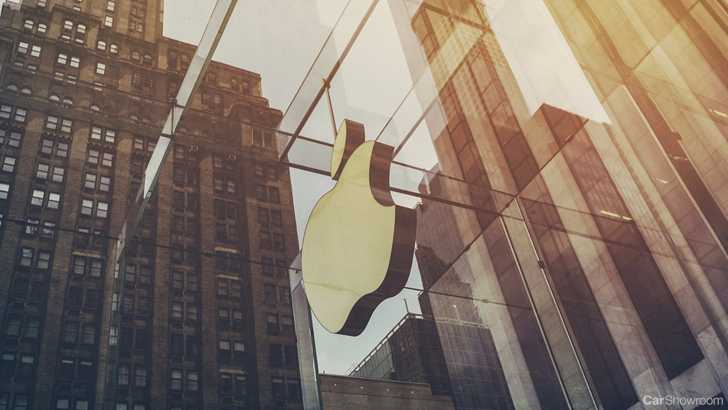
Despite Apple being one of the most secretive companies in the world, a global audience keenly followed the news that the automotive industry held more than a passing fancy for the tech giant.
Insider sources were quizzed by numerous journalists until the internal codename of ‘Project Titan’ was revealed and further postulations were garnered from notable hires of bright minds away from high-ranking positions at high-profile automakers. ‘Apple was building its own car,’ the narrative went.
But now a report by Bloomberg’s Mark Gurman and Alex Webb tells of the Apple’s Titan project as it was over the recent months, and according to their own well-placed inquiries, the Cupertino company is scaling back its ambitions in the automotive space significantly.
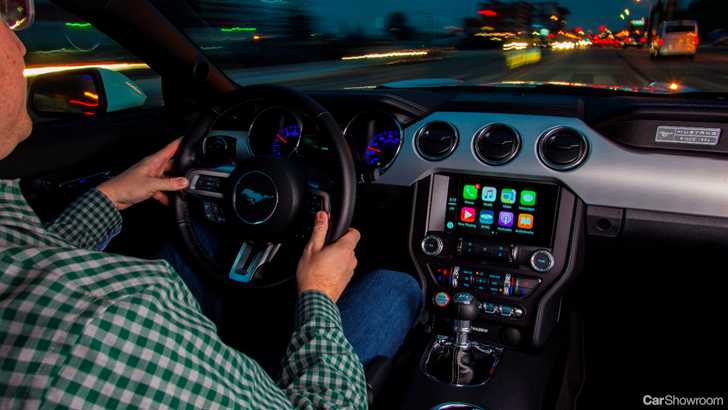
No longer should Tesla fear the looming threat of a self-driving, purely electric vehicle to come out of Apple to rival their Model S or Model 3 - at least for now, according to the report. Instead, so it purports, efforts will be rerouted to developing sophisticated self-driving software that Apple can then deploy to cars from existing manufacturers as partners.
It also paints a rather grim picture of Apple’s internal vehicle team tasked with exploring a territory that’s completely alien through the eyes of the iPhone maker. It consisted of at least 1,000 employees who have been a part of the group since its inception in 2014 that, in the wake of this development, have been either reassigned, let go, or have left voluntarily.
The exact reason for Apple to step away from its automotive side project is left a little ambiguous. However, it seems to be hinted at that the company had not anticipated the sheer complexity of the task they had at hand, particularly concerning the supply chain constraints that they would immediately run into if they intended to produce vehicles at the scale they wanted, along with “months of strategy disagreements, leadership flux..”
“For a quality Apple-branded car they could probably get a healthy margin,” said Eric Paul Dennis, an analyst at the Center for Automotive Research. “They probably weren’t willing to compromise on quality issues.” This is especially true when one considers Apple’s preferred profit margin. The scale and projected cost to manufacture were a total mismatch.
Google (or, more accurately, Alphabet Inc), who is a competitor to Apple in many arenas, had earlier devoted resources to tackling the the automotive industry, even developing its own cutesy self-driving electric test car. More recently, though, they too had scaled back its plans, instead choosing to partner with automakers and ride sharing services to develop autonomous driving systems.
That said, licensing software to partners is a definite incongruence to the kind of strategy we’re used to seeing from Apple. All their products are created, controlled, and integrated very tightly - it’s the core of the their approach. Having to go through partners to spread their platform is more Microsoftian in strategy.