Two weeks ago, Tesla CEO Elon Musk hinted at what could be unveiled at a fast-approaching event. In the end, the event was delayed by a couple of days, and even until the moments leading up to it, the world was expecting the a new fourth model, the purported Model Y crossover to be a more affordable companion to the Model X.
Instead of an all-new car, however, Tesla unveiled a suite of technological updates that is potentially of far more importance which will come standard on every car they make. Namely, this is to service the future of self-driving cars. True self driving cars.
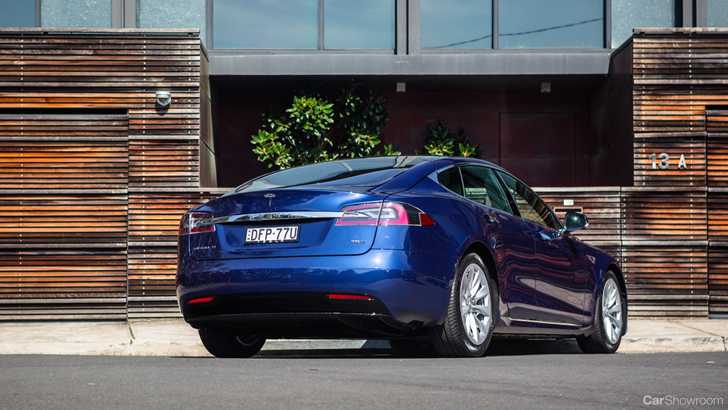
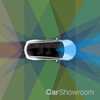
In short, the level of sensory perception that allows a current Model S or Model X to partially drive itself along motorways as advertised in its Autopilot feature is about to get a big boost. A total of eight cameras will be fitted to every car they produce, resulting in the ability for it to recognise and process a 360-degree view of its surroundings for up to 250 metres away.
In addition, these are aided by a set of 12 embedded new ultrasonic sensors that allows for the car to perceive solid object and ‘soft’ obstacles that work in tandem with a more sensitive forward-facing radar that can see through heavy fog, rain, dust or fog.
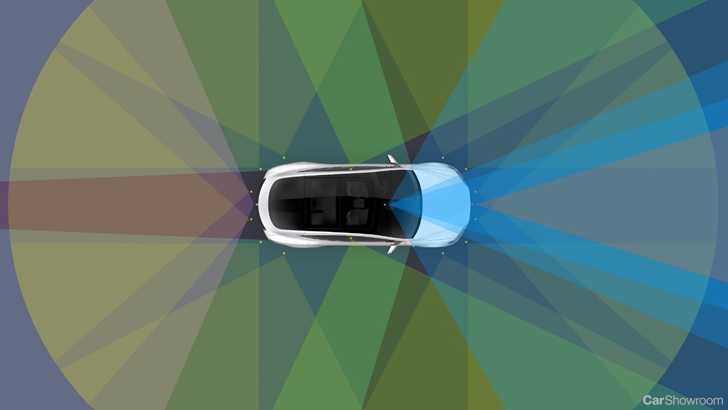
These feeds of data is processed through a new onboard computer, developed with Nvidia, that is 40 times more powerful than its predecessor.
According to Tesla, this hardware suite - called Tesla Vision - allows their cars to operate at Level 5 autonomy, one higher than the Level 4 that is thought to be required for fully autonomous cars that do not need human intervention at all.
However, despite Tesla Vision and more capable Autopilot software is available in EVs rolling off the production line now, Tesla says the neural-net will need an extensive amount accumulated learning to refine the artificial intelligence to the point that it can safely be deployed (or ‘activated’) for use by all owners.


Therefore, in cars equipped with said hardware, the Tesla Vision system will operate in a background ‘shadow mode’, collecting driving and road data to collectively learn to be fully autonomous under a variety of everyday conditions.
It should take a full year for this learning process to complete and the software to receive the seal of approval, at which point it will be rolled out as an over-the-air software update. Elon Musk said that once this happens, likely in late 2017, Teslas will be able to transport their passengers from New York to Los Angeles without needing any driver input.
If this all proves accurate, it will be possible to even summon your car to you even if you’re all the way across town. It will navigate the streets, traffic, pedestrians, and other miscellaneous obstacles to reach its destination. Tesla says their cars can even be summoned from across the country once the system is fully rolled out, but we’re taking that with a sizeable grain of salt.
And it looks like we’ll have to wait at least until the next event for Tesla’s more affordable crossover to break cover.
For more on Tesla vehicles, including pricing and specifications, check out our Showroom.