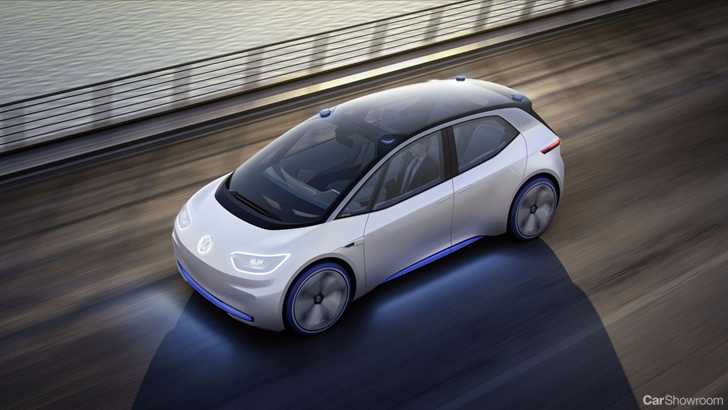
Volkswagen unveiled its ID concept recently at the 2016 Paris Motor Show following a whirlwind of speculation and quite a bit of bluster from the German automaker, still tending to its wounds after last year’s emissions falsifying embarrassment.
It said the fully electric car, which is still some years away from becoming a production reality, would become as iconic in the automotive landscape at large and as important to the company as the original Beetle was. No pressure, then.
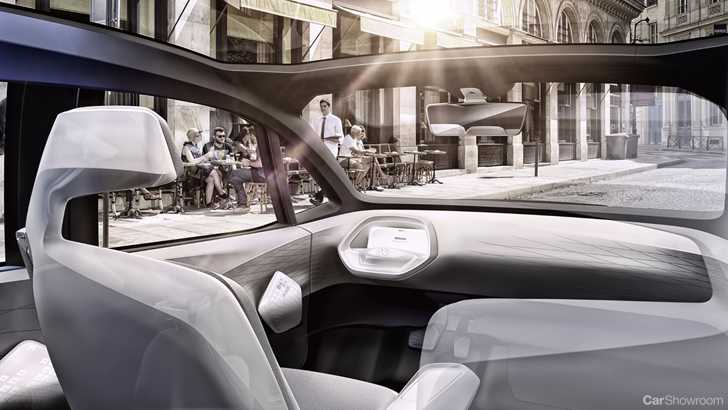
In addition to futuristic zero emissions drivetrain, power system, and construction, Volkswagen says that it will be introducing a reinvention of vehicle instrumentation. This, as relayed to Autocar UK via design boss Klauss Bischoff, is enabled by the unique packaging solutions enabled by EVs.
By moving the motor to the rear of the car and the energy storage into the car’s floor, there’s little else that needs to protrude into the cabin space, thus VW has been able to extend the dashboard 200mm toward the nose of the car where, coincidentally, the climate control system is housed.

The more spacious interior will allow Volkswagen more room to implement its ‘augmented HUD’ interface, projecting information and graphics in such a way that it will look like they are being displayed onto the road surface (turn arrows and street information, for example) or made to appear as if they are 15 metres ahead.
Naturally, the VW Group will want to leverage the richness of its navigation features with the growth of the HERE mapping cloud, a technology and location data company that was jointly acquired by Audi, BMW, and Daimler from former owner Nokia.
The plans for the HERE platform are indeed ambitious, building upon the already impressive archive of mapping information and supplementing it with three-dimensional accurate maps constructed by Lidar scans from a growing number of vehicles equipped with the sensor array. When it is fully formed, these will paint a virtual memory for cars to better drive autonomously as well as to spread live information to other vehicles on the road.
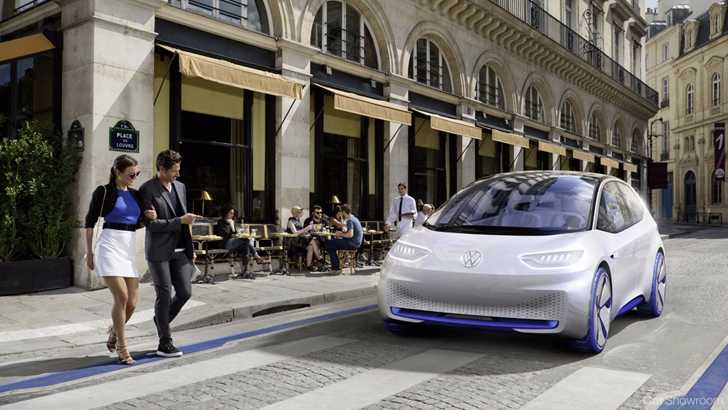
Volkswagen’s planned augmented HUD system can then feed alerts of potential hazards to the occupants such as pedestrian crossings, stationary obstructions, dangerous road conditions, poor visibility, or accidents ahead.
The marque will also likely factor in their gesture-based touch technology into this. Most recently, their facelifted MK7 Golf was made available with a series of improved infotainment and navigation systems, including those that work through simply waving or making swiping gestures to toggle specific functions.
For more on Volkswagen vehicles, including pricing and specifications, check out our Showroom.


