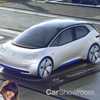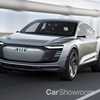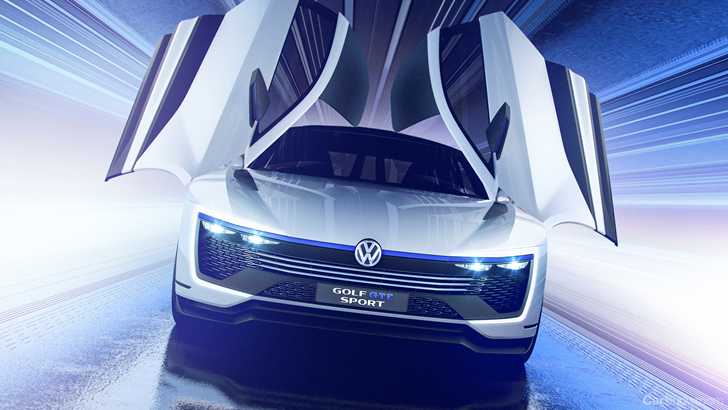
In one stroke, Volkswagen wants to distance themselves from the sour taste left over from ‘Dieselgate’ and forge a forward path to becoming the world’s foremost volume supplier of electric cars. By embarking on an ambitious electrification plan that involves pretty much every branch under its trunk of subsidiaries, a unified mobilisation could make them uniquely suited to becoming just that.
Since then, we’ve seen a concerted effort to focus on future technologies such as a wider adoption of electrification in their most popular models (Group-wide) as well as a roadmap of models and technologies that can spur a mass exodus away from internal combustion engines if executed with sufficient deftness.
All that might be for nought, however, if the impending battery supply problem persists, according to Audi’s head of research and development, Ulrich Eichhorn. In the closing stages of last month, the automotive veteran warned of a drastic upsurge of lithium-ion cells that will correlate with the increased industry-wide emphasis on zero emissions and fuel efficiency by merging a conventional fuel-burning motor with an electric one.


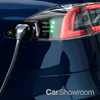
By 2025, Eichhorn noted, he estimates that the production needs of the Volkswagen Group alone (which includes Audi, Porsche, Bentley, Seat, Skoda) would require 200GWh of battery cells. In more direct terms, he extrapolates that - assuming a uniform target of a vehicle portfolio of 25 percent being fully electric across all manufacturers - that the world would need the rough equivalent of 40 Tesla Gigafactories in order to keep up with demand.
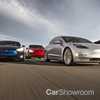
The new Nevada factory for the Californian electric car company is purported to have a production capacity of 35 GWh (Tesla’s own 2018 target), and is soon to officially be the world’s single largest facility to produce lithium-ion batteries. If a staggering 1,400 GWh would account for just 25 percent of the world’s vehicle battery production needs by the year 2025, an entire world of zero emissions battery-powered cars could depend on a supply chain that churns out 5,600 GWh each year.
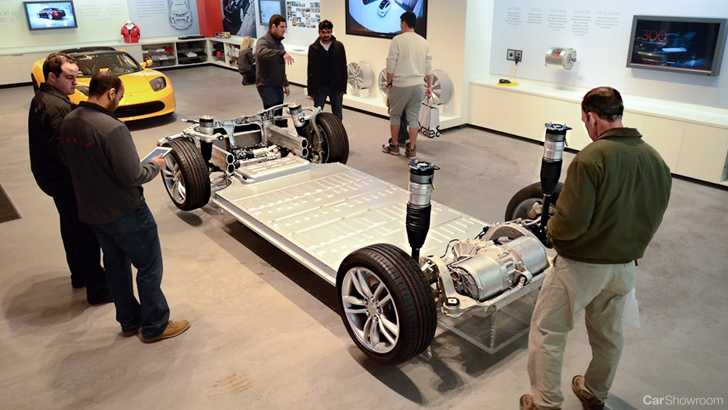
To be fair, Tesla themselves estimate that their Gigafactory’s manufacturing capacity could rise to as much as 150 GWh by the year 2020. Still, barring several major innovations, this could pose a dramatic ecological toll as lithium mining is still a process riddled with toxic processes that can have long term effects on the area involved. What’s more, lithium is a non-renewable raw material, and the sustainable future of transportation hinges upon improving used battery recycling processes as well as ensuring the longevity and high charge capacity of these cells.
In the wake of the that aforementioned emissions scandal that first penetrated the public sphere in late 2015, Volkswagen has lost a lot of customer confidence in their own oil burners at the most - this is the case for some markets - and is actively coughing up the cash to settle lawsuits that have stemmed from that incident across a broad set of territories.
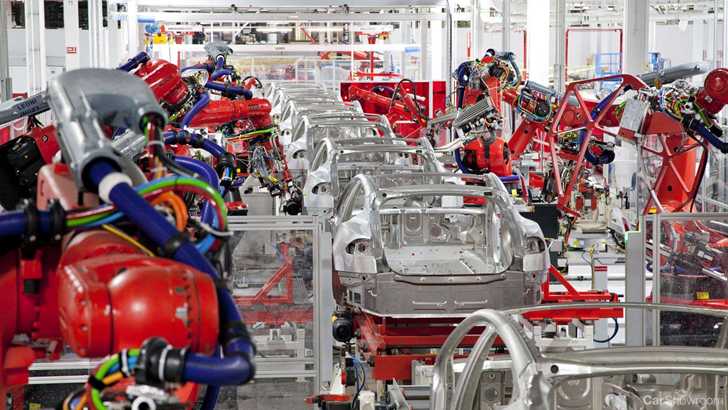
Unlike Tesla, Volkswagen is - at least for the moment - not terribly interested in pursuing their own in-house battery cell production. In the short term, the automotive giant seems confident that third-party suppliers are up to the task. However, it’s quite plausible to envision VW demanding control over the entire hardware stack to sweeten the cost structure.
For more on Volkswagen, Audi, or Tesla, check out our Showroom.