This is a story we hoped we’d never write. Toyota’s announcement late yesterday that it will end Australian manufacturing in 2017 brings the curtain down on local vehicle manufacturing – a proud history which dates back to the first Holden in 1948.
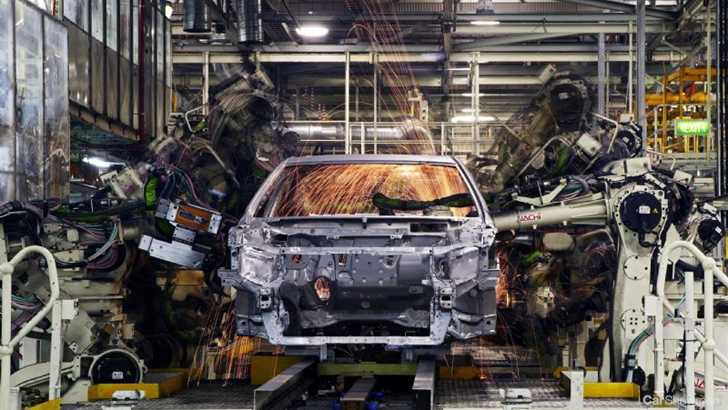
Don’t underestimate the agony behind Toyota’s decision. There’s a lot of pride and emotion within the world’s number one car-maker as the start of Toyota assembly in Australia way back in 1963 marked the first time Toyotas were produced outside Japan.
Your Car Showroom correspondent first started writing about cars in the early 1980s and in that time we’ve seen Australian manufacturing end at Nissan in 1992, at Mitsubishi in 2008 and in the next three years Ford, Holden and Toyota will shutter their local production facilities. We’ve seen first-hand the impact on friends and colleagues employed by Nissan and Mitsubishi and we’re now seeing it at Holden, Ford and Toyota.
As we write, just hours after Toyota’s announcement the attribution of blame from politicians and industry people has already become boring and irrelevant.
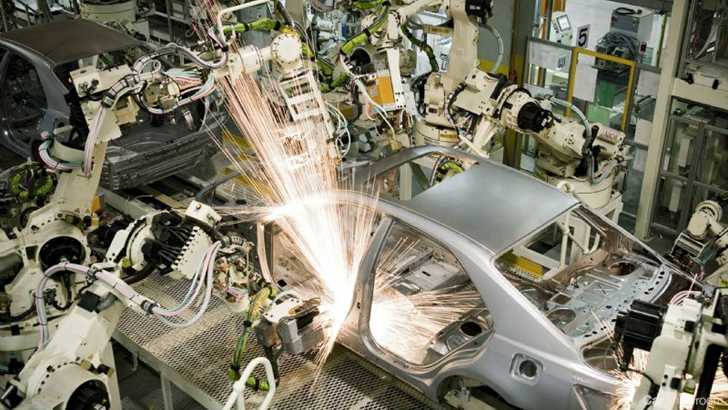
Those leaning right talk of over-award conditions and generous EBAs for workers. But that in itself wouldn’t be a problem if the company involved was hugely profitable.
Those leaning left talk of more Government assistance to keep plants open. But what’s the point of taxpayers subsidizing loss-making factories?
“We did everything that we could to transform our business, but the reality is that there are too many factors beyond our control that make it unviable to build cars in Australia,” explained Toyota Australia boss Max Yasuda.
Yes those factors do include the high labour costs in Australia, but also the strength of the Australian dollar and free trade agreements with other countries which specifically for the car industry aren’t reciprocal. But the over-riding factor is volume.
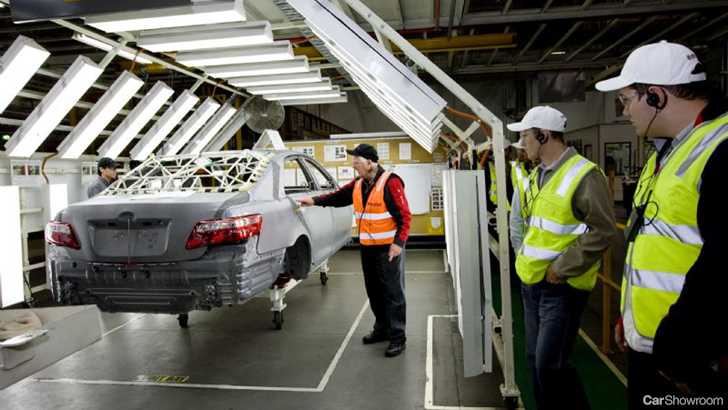
Dating back to Henry Ford and the T-Model, and as predicted in the local car plan accredited to Senator John Button in the early 80’s, car production’s success rests with mass production and even back then, the Button Car Plan concluded we had too many plants building too few cars. These days for a car plant to be sustainable in Australia, annual production must top 300,000 vehicles – last year Toyota was the best of the locals, making 106,252 of which some 70 per-cent were exported.
The fact is, with Australia’s population, our annual new car sales total just over 1.0 million vehicles – but there are more than 60 automotive brands competing for a slice of that market. For some years there has not been any chance Australian manufacturing by any brand could be sustainable and efforts by local management to keep the plants open – including scouring the world for export sales opportunities - have been unrelenting to say the least.
Because our factories don’t operate in isolation and a major factor behind Toyota’s decision was the failure to secure local manufacturing for the next generation Camry/Aurion. In order to secure that contract from other Toyota plants in Thailand, Japan and North America, Toyota Australia needed to pull around $3,800 from the cost of every car made here – that’s in the region of 20 per-cent of the per unit cost of assembly at the Altona, VIC plant.
The personal cost extends way beyond those directly employed by the car companies. Estimates are the closure of manufacturing plants by Toyota, Holden and Ford will directly cost 6600 jobs but beyond that, to the component sector, up to 20,000 jobs and businesses, mostly in Victoria and cumulatively worth $2.25 billion each year are at risk.
A small number of Australian component manufacturers have secured contracts to supply to foreign plants but the numbers are small and future viability of those companies is seriously questioned.
As is the future of local NCAP barrier testing (an operation jointly funded by the Auto Clubs and Government). ANCAP was established primarily because of the need to submit unique locally-produced cars to the same barrier testing as undertaken by NCAP in Europe, North America and Asia. But with no local cars to test, what’s the point of re-testing the same car which has already struck a barrier overseas and received a global-standard star rating for crash safety?
Perhaps most significantly, what shouldn’t be overlooked as we face the end of Australian new car production is the role that business played in the broader scheme of Australian industry. The local vehicle industry is world-standard in its technology, processes and design and has been responsible for the procurement and training of thousands of people who have taken that expertise to other industry sectors. No-one has even talked of how that void in our national skill set will be addressed.
In all of this there has been erroneous commentary about the declining sales of large cars. Yes, globally large car sales continue to decline and in Australia buyers have also walked away from cars like the Holden Commodore, Ford Falcon and Toyota Camry/Aurion in favour of both more fuel-efficient small cars and large, not fuel-efficient SUVs.
But again it gets back to the lack of volume in the local market. Sales of the locally-produced Holden Cruze sales last year were 22,959 and of the imports there’s Toyota Corolla (39,794), Ford Focus (17,959), Toyota Yaris (13,386), Holden Barina (10,178) and Ford Fiesta (7817) – even if they were made here, again there’s not sufficient volume to sustain local manufacturing (without significant export sales, but foreign plants are able to make these cars for much less than the cost of making them in Australia).
So where does this leave Australian new cars buyers? Well most of our annual sales are already being accounted for by imported vehicles and the void left following the end of local production by Toyota, Holden and Ford will be filled with further imports which, to be frank, does include a tasty lineup of possibilities.
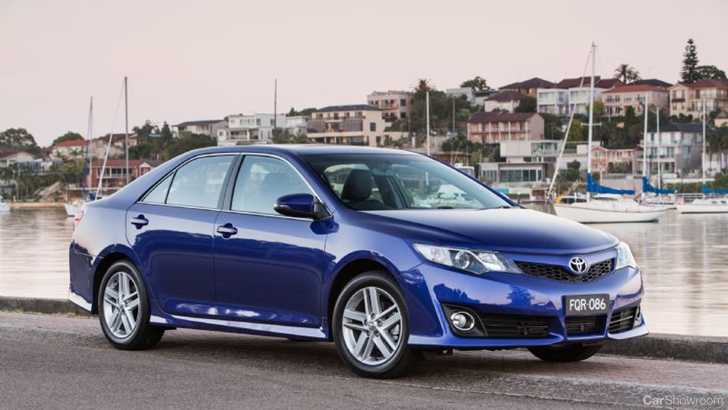
Nothing has been confirmed but in all likelihood Toyota will import the Camry/Aurion from Thailand (the same plant which already produces the top-selling Hi-Lux ute) or even Japan. Speculation points to the Holden Commodore becoming a re-badged version of either the good-looking Buick Regal or the Chevrolet Impala (both from North America).
Ford is another question mark. We already know the sporty Ford Mustang is coming, but what of the Territory replacement? Well there’s the excellent North American Explorer or a Ranger-based SUV. Ford may decide to not replace the Falcon, leaving the European Mondeo as the ‘Blue Oval’s’ go-to passenger car or we could see the stylish North American Taurus here.
What we must control is the importation of second-hand vehicles – a point which sees our friends in New Zealand sharing the road with a myriad of pre-used vehicles (mostly from Asian countries) with seemingly little regulation for state-of-the-art safety and emissions standards.


