Who woulda thunk it?
“Sports cars make you feel good” is apparently something - a notion, an accepted fact - that needed emphasising. Ford, in this sort-of-marketing campaign, seemed to have actually gone through the trouble of conducting a science-based survey to quantify this.
The study, as seriously as they are taking it, focuses on measuring the positive emotional effect that an exhilarating drive can provide, and how that impacts the our larger well being. The case is then made that, because a sports car is more accessible for more of the time to the majority of us than, say, a roller coaster ride, we should probably indulge in driving one from time to time. And driving one would typically entail owning a sports car like the Focus ST, Focus RS or Mustang GT.
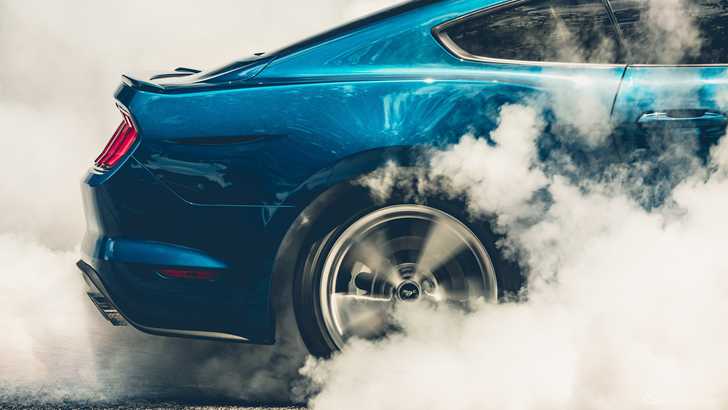
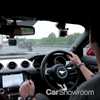
These “buzz moments”, as they’re now coined, can be found in other ways throughout life as well, and Ford measured the amount, duration, and accessibility that these activities would entail. To contrast that ‘constant’ with the real variable here, they also plonked the study’s participants behind the wheel of either a Ford Focus RS or Mustang GT (naturally), and proceeded to measure things like heartbeat, rate of breath, perspiration, and spikes in hormones such as adrenaline, endorphin, and dopamine using medical-grade wearable equipment.
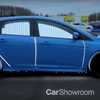
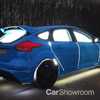
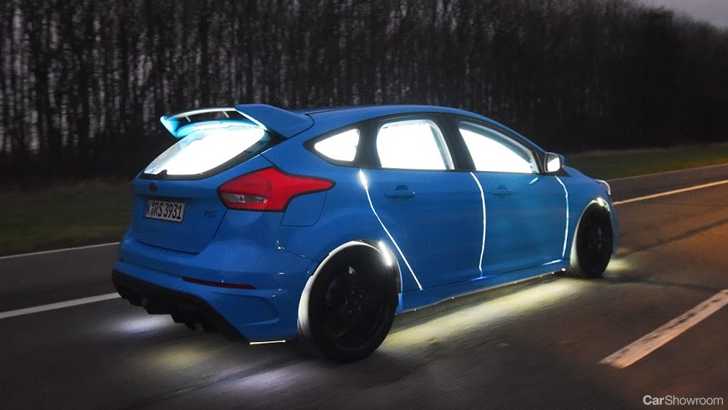
To turn these reactions into a real time visual spectacle, Ford took a Nitrous Blue Focus RS and basically had it fitted with the world’s fanciest light kit, comprising of 110 daylight-bright light strips, 82 display panels with 188,416 LEDs, and a Zotac VR GO gaming PC to turn the real-time on-body driver data to graphics that represent levels of excitement, observable from the outside.
Generally, during a typical commute (in a fast and fun car), the participants experienced an average of 2.1 high-intensity ‘buzz moments’ compared to 3.0 ‘buzz moments’ during a roller coaster ride. More everyday situations were tested as well, including a shopping trip (1.7) and watching an episode of Game of Thrones (1.5), a score which tied with a the sensation of watching a football match.
Other tests to measure these life-affirming ‘buzz moments’ also included fine dining, sharing a passionate kiss, and salsa dancing. All of which amounted to too small a spike that it did not even register a score past zero.
"Ultimately, what we found is that, as you would expect, riding a roller coaster does provide the most concentrated form of buzz moments, but that driving a performance car is the most reliable and the most accessible way of getting these moments,” said Dr Harry Witchel, Discipline Leader in Physiology, adding, “this study shows how driving a performance car does much more than get you from A to B – it could be a valuable part of your daily wellbeing routine.”


Meanwhile, Dr Marcel Mathissen, research scientist at Ford of Europe, says: “We think driving should be an enjoyable, emotional experience. The driver-state research Ford and its partners are undertaking is helping to lead us towards safer roads and – importantly – healthier driving.”
- Roller Coaster: 3
- Driving: 2.1
- Shopping: 1.7
- "Game of Thrones": 1.5
- Football Game: 1.5
- Kissing: 0
- Salsa Dancing: 0
- Dining: 0
Can’t say we’d call this an especially worthwhile study, but we do definitely agree that exciting cars should be an essential part of our diet to maintain healthy mental wellbeing. Driverless cars may be on the horizon, but good old analogue driving sensations aren’t going anywhere.
For more on Ford cars, check out our Showroom.