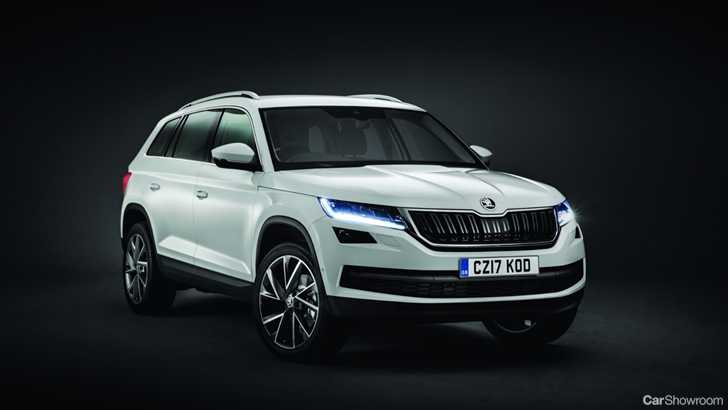
Skoda has finally taken the wraps off their newest model to their stable of vehicles, this time its an SUV, their first ever, called the Kodiaq. The new model can trace its roots back to late 2015 when Skoda unveiled the Vision S concept, a striking seven-seater with an exterior that has managed to emerge relatively intact all the way to production spec.
The Volkswagen-owned Czech automaker says that the new Kodiaq will be available on roads starting in early 2017 and should even spawn a smaller coupe-like counterpart to succeed the somewhat dated Yeti in the crossover front.
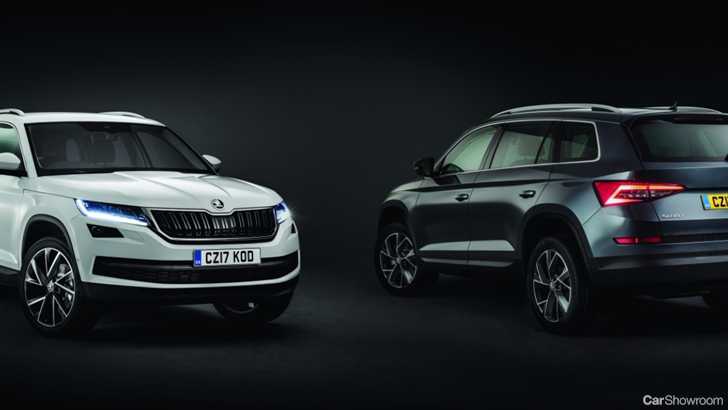
“With the ŠKODA Kodiaq, we are striking out in a new direction and opening up new markets,” says ŠKODA CEO Bernhard Maier. “With our first large SUV, we are conquering a new segment for the brand – and new customer groups. Our new addition to the ŠKODA model range is truly as strong as a bear: it makes the brand even more attractive thanks to its concept, striking design and as the first ŠKODA that has the option of always being online and thereby offering more comfort, safety and real-time information.The ŠKODA Kodiaq is at the forefront of ŠKODA’s extensive SUV campaign.”
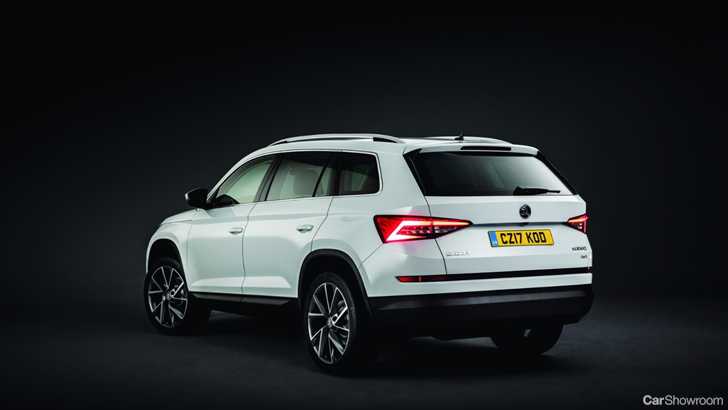
The new design marks a turn for Skoda, integrating new cues that apparently stem from a studying the artwork and cultural expressions of the brand’s native country. To the rest of us, this translates to strong lines, tasteful proportions, and what should be a rather commanding presence on the road given its 4.7 metre length. Especially so if the larger 19-inch wheels are specified.
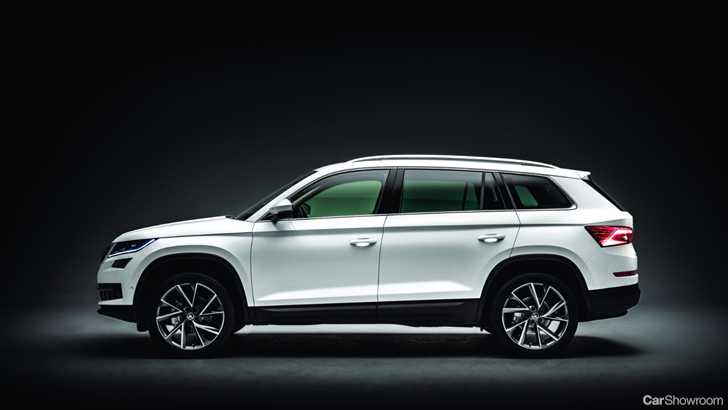
Built atop the Volkswagen Group’s MQB platform, which is currently shares with the newest Tiguan, the Kodiaq is a more substantial vehicle, able to seat 7 occupants over the former’s maximum of 5.
Buyers can also opt to have the Dynamic Chassis Control system fitted, choosing from either Comfort, Normal, or Sports mode. On that last option, Skoda intended to make sure that the Kodiaq, despite it’s SUV status, handled decently and have outfitted it with aluminium MacPherson front struts and a four-link rear axle setup.
Inside, there’s a decidedly familiar passenger car-like feel to the cabin, perhaps masking its larger-than-average volume for an SUV, as claimed by the manufacturer. Skoda says that they’ve focused on ‘bold vertical elements’, which luckily they did not apply to the new infotainment display. Measuring 6.5-inches or a more pixel-dense 8-inches depending on variant and trim, both units sports a fresh interface and support for Apple CarPlay and Android Auto, thankfully, and can also be ordered with a premium 10-speaker Canton 575W audio system.
The standard seats are fabric on the entry-level Active but can will be fitted with leather/Alcantara upholstery on the top-spec Style trim.


At launch there are a total of five available engines comprising of three TSI petrol engines and two TDI diesels all sourced from parent company Volkswagen, as you might imagine, with the spread closely mirroring that of the second-generation Tiguan, driving either the front wheels or all four. Starting the petrols, we have the 1.4-litre TSI four-cylinder which kicks out either 92kW and 200Nm or 110kW and 250Nm. At the higher-end, there’s the benchmark EA888 2.0-litre TSI unit which puts down 132kW and 320Nm.
For the diesels a single 2.0-litre TDI engine is called for duty but is available in two tunes, the first being 110kW/340Nm and the other a beefy 140kW/400Nm. All engines meet the Euro6 emissions standard and are mated to either a 6-speed manual or a twin-clutch DSG automatic with six or seven forward ratios. To further save fuel, all engines on the Kodiaq feature a stop-start system, brake energy recovery, and thermal management system as standard.
For more on Skoda vehicles, including pricing and specifications, check out our Showroom.


