
When Porsche first announced the Mission E, a high performance all-electric sports sedan, at the 2015 Frankfurt Motor Show, the world immediately knew the German automaker is gunning straight for the same niche that Tesla’s Model S had tapped into.
But since then, sans the many unconfirmed rumours that could find their way into a full production version, there’s not many details that have surfaced about this pivotal new car. Recently, though, Autocar sat down with Porsche chairman Oliver Blume, who shed some light on a matter still shrouded in mystery.
According to him, despite being a newer and more advanced car, the Mission E will be positioned below the flagship Panamera, both in size and price. In addition, the car will have different variants that correspond with varying levels of battery capacity and power output - a familiar method of tiering the car to suit a wider price spectrum.

Blume also highlighted the fact that it will have over 500km of range, indicating that even the least powerful Mission E will have a decent amount of travel potential. Once that power is depleted, the car’s charging technology is said to offer a 15 minute charge time - which is astounding if true.
Porsche proprietary fast charging tech will likely not fill the battery up to capacity, but should be able to inject a fair amount of power into those cells before returning to a slower rate in much the same way modern smartphones are able to do.
This will probably won’t be a feature exploitable to future owners who charge their Mission E from a household socket but is more likely to be something made possible by the more specialised equipment at public charging stations. The 800v charging system announced alongside the Mission E concept is likely to remain in the production specification.
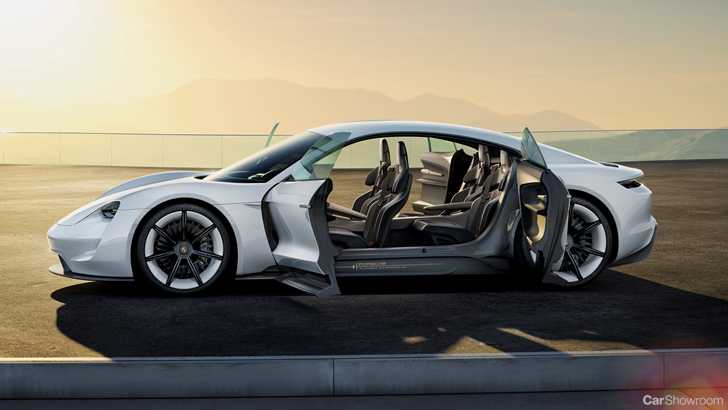
As for how much raw power the car can summon, “590 horsepower” or 434kW was previously mentioned. It’s not clear if this was a conservative figure, leaving the question of how much more performance Porsche can potentially extract an open one. Same goes for the previously reported “less than 3.5 seconds” century sprint time.
Porsche is using the J1 platform, one of three electric vehicle architectures that parent company Volkswagen is developing as part of their big push toward zero emissions mobility. It was chosen due to it being low orientation, light weight, more obvious handling benefits, and overall rigidity.
VW will need a lot of batteries for their group-wide electric vehicle rollout to be successful, with the more high profile first uses being for the Volkswagen ID, Audi E-tron quattro SUV, and finally the Porsche Mission E. It’s rumoured that they have been working with Hitachi as their long-term partner and supplier on this front in much the same way Tesla is collaborating with Panasonic.
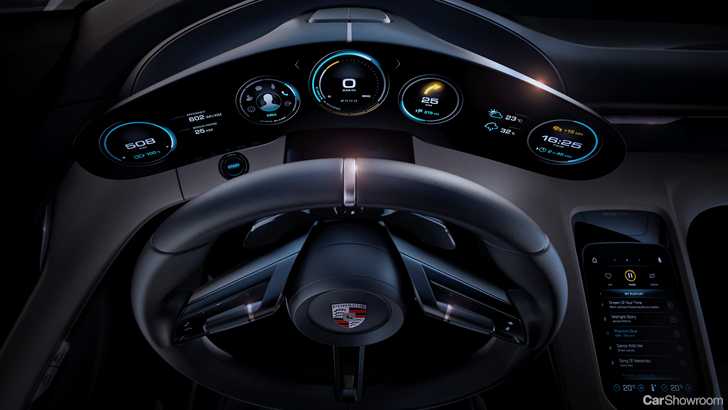
Another nugget obtained from the Blume conversation was the planned Level 4 autonomous drive systems built into the Mission E at launch, but was careful to stipulate that it will likely not be over long journeys. In more urban driving such as city commutes and traffic jams, however, the Mission E should be able to operate without any driver intervention.
For more on Porsche vehicles, including pricing and specifications, check out our Showroom.


