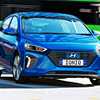
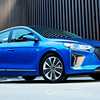
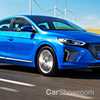
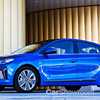
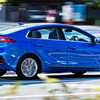
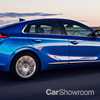
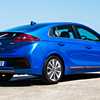
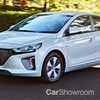
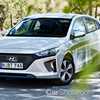
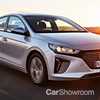
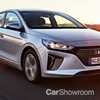
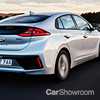
New green Korean trio makes for a Goldilocks experience.


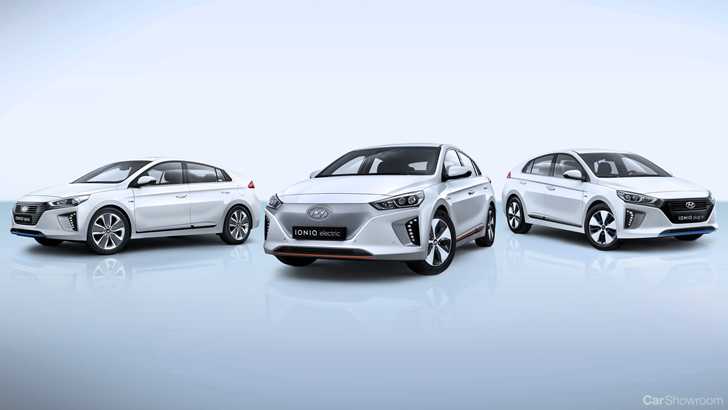
Korean marque Hyundai has just dropped its all-new Ioniq 5-door fastbacks for our market, in three distinct flavours. The Ioniq Hybrid, Ioniq Plug-In Hybrid, and Ioniq EV are all available here, giving buyers the choice between varying levels of electrification for the first time. It’s also notable that the Ioniq is the first ‘green’ vehicle from the brand to land on our shores, though you probably don’t care about that.
The thing about the three Ioniq models is that it really does let you choose just how much electrification you want in your life. Happy to live with a charging cable? Maybe the EV’s your thing. Need longer range? The Hybrid will probably suit your needs. Own a big family car and only need your Ioniq for urban commuting? Then the EV is right up your alley.
The choice is yours.
The Ioniq Hybrid
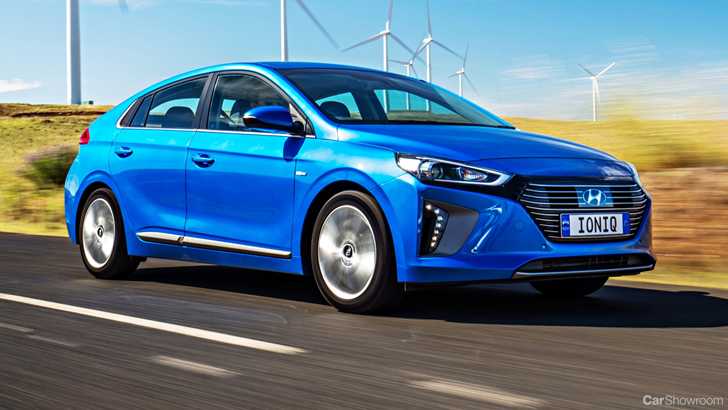
The Hybrid is perhaps the model that needs least introduction. We’re quite familiar with hybrids: Downsized petrol engine, electric motor, piddly batteries stuffed somewhere in the architecture. In the case of the Ioniq Hybrid, you get an Atkinson-cycle burner putting out 77kW and 147Nm, mated to a 32kW/170Bn electric motor, with a 1.56kWh Li-Ion pack playing the role of piddly battery. Improved fuel-economy is the game here, with a claimed average of between 3.4L/100km and 3.9L/100km. In reality, expect maybe close to 5L/100km.
Again, economy is the name of the game here. It’s about allowing electrification to be a part of your life without having to make serious changes for it. You can continue to visit your petrol station as you usually do, you don’t have to change your habits, nothing. You just get to reap the benefits of having electric assistance on hand when you need it most, allowing you to see that magical fuel economy figure that your friends in their pure-combustion vehicles will never even dream about.
The Ioniq Plug-In


So let’s say you’re open to making some changes, and that you don’t think wistfully about what’ll happen to your relationship with your local garage if you stop going there for fuel as often. You are, like this writer, the kind of person who’s ready & happy to make a relatively-small change in terms of habits, particularly if it reaps big rewards for the wallet.
In that case, the Ioniq Plug-In is just for you.
It takes the same Atkinson-cycle engine as the Hybrid, but here it gets matched up to a beefier 44.5kW/170Nm electric motor, which is fed by an 8.9kWh battery. With a little bit of effort (namely charging the thing wherever you can, but mostly at home), you’ll be able to enjoy 63km of petrol-, emissions- and noise-free motoring on a full charge. Based on official testing, the Ioniq PHEV boasts a certified fuel consumption figure of just 1.1L/100km, and we can tell you that if you embrace the #pluginlyfe, you can very easily hit that number.
The Ioniq Electric
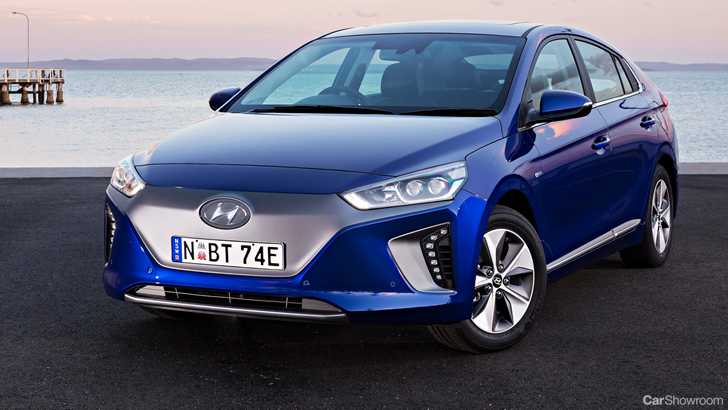
Lots of people are skeptical of electric vehicles, and rightfully so. Their range is limited, a particular bane of contention among Australians, and so the appeal of an electric vehicle is equally limited. That said, more affluent households own more than one car: In such a scenario, there’s usually a smaller car used for shorter trips, and a larger car for family outings and such, when every possible inch of space for people and luggage counts.
That is perhaps the best scenario for owning an electric car, today. Things will change later when chargers are more prevalent and fast-charing (true fast-charging) becomes a reality but for right now, if you’re a two-car household, perhaps one of those cars could be an Ioniq EV.
A 28kWh battery takes the place of the engine here, feeding the most powerful of the three electric motors here. The 88kW/295Nm motor can power the Ioniq EV, on a full charge, as far as 230km. Additionally, the Ioniq EV also has the fastest charge rate available, able to accept up to 100kW of incoming electricity. As such, at a 100kW charger, you can replenish 80% battery in 23-minutes.
But 100kW chargers are few and far between. A more common 50kW fast-charger on the other hand, will be able to replenish that 80% of battery in just 30-minutes. Hardly a major trade-off, don’t you think?
Decisions, decisions…
Regardless which model you go for, the Hyundai Ioniq is impressively well-kitted as a family hauler. Within its diminutive fastback design lies big-car features like collision warning with pedestrian detection, blind-spot monitoring, rear cross-traffic alert, lane-keep assist, and driver-drowsiness detection. Intelligent cruise control completes the suite of ADAS systems, though the Ioniq Electric benefits from the addition of full Stop & Go functionality to the cruise control system.
All cars also come with features like an 8.0-inch colour touchscreen MMI system (multimedia interface), that sits high on the dash to ensure it’s always in the drivers’ line of sight. Replete with Android Auto and Apple CarPlay, the system is hooked up to an 8-speaker “premium” audio system by Infinity, which can either play your streamed music, or anything on DAB+ digital radio.
You also get things like a 4.2-inch TFT LCD display nestled between the dials on HEV & PHEV variants, while Ioniq EVs get a full 7.0-inch TFT display that shows more detailed powertrain information. In addition to this, Ioniqs in Premium spec will get things like heated & ventilated front seats, a heated steering wheel, powered drivers seat, climate control, and wireless smartphone charging. An electric parking brake, keyless entry & go, and electric parking brake are all standard, along with Hyundai Auto Link (that lets you connect to your car via Bluetooth to keep track of vehicle info, allowing you to maximise every drive).
So which Ioniq is for you then? With prices starting at $33,990 for the Ioniq Hybrid Elite and rising all the way to $48,990 for an Ioniq EV Premium, there truly is an Ioniq for everyone. Which one’s yours?
For the best deals on a new Hyundai, check out our Showroom.