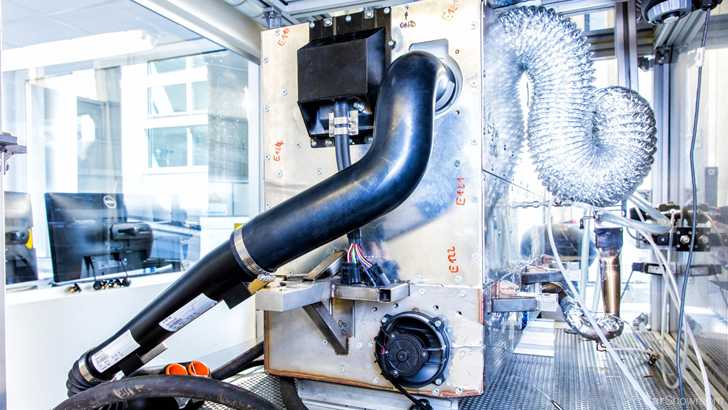
Petrol and diesel hybrids and/or fully electric cars can’t possibly be the only way to augment fossil fuel combustion with electric propulsion, and Nissan has just shown one of its endeavours into this alternative take with a ‘Solid Oxide Fuel Cell’ engine.
The Japanese automaker claims that this is the first of its kind and not only is it much more efficient on a collective end-to-end carbon scale, but will also be able to match internal combustion cars for range – more than 600km, by their estimates. And they already have firm plans of putting it into production, although a date has not been specified.
Despite its novel method of power generation, Nissan says that by the metrics that we judge cars as a driving experience, the average driver and passenger will not notice the difference between this and a regular electric vehicle in terms of power delivery, acceleration and noise levels.
It will be silent and have instant urge just like an EV because an electric motor is what will be driving the wheels. But instead of merely storing energy within the car like a traditional EV, Nissan’s future Solid Oxide Fuel Cell car will generate its own power.
This is achieved through the breakdown bioethanol fuel to produce hydrogen and generate electricity. Whereas other fuel cell cars store hydrogen in a tank much the same way current cars carry petrol/diesel or EVs store charge, Nissan’s will store bioethanol. And just like other hydrogen fuel cell cars, the only real emission is water vapour.
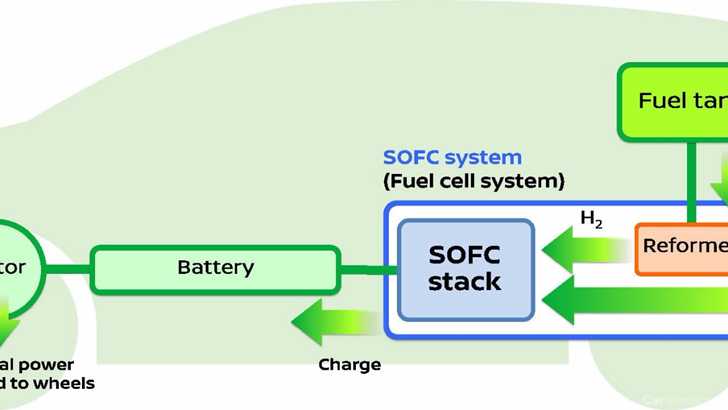
The bioethanol fuel itself will be made from sugarcane and will generate very little carbon dioxide during the production process. It’s an common crop found in countries close to the equator, meaning transportation costs should be reduced dramatically due to its centralised location.
Nissan is confident that the engine’s internal generation of hydrogen from bioethanol is the last piece of the puzzle that had previously hampered the mass adoption of fuel cell vehicles by the automotive industry.
Not only that, but the identical nature of bioethanol as an alternative liquid fuel means that the current global distribution infrastructure would not have to change and cars would be refuelled at the pumps (taking a few minutes each) just as they are now.
Nissan hasn’t exactly been a stranger to the post-oil power discussion. It has had its share of contributions, such as its Leaf four-door EV and, by extension of its sister company Renault, the funky one-seat Twizy. Interestingly, Nissan says that they are pursuing this technology without Renault’s involvement, at least for now.
For more on Nissan vehicles, including pricing and specifications, check out our Showroom.


