Nissan’s LEAF electric car was previewed in production form at the Geneva Motor Show ahead of sales launches in North America, Europe and Japan later this year.
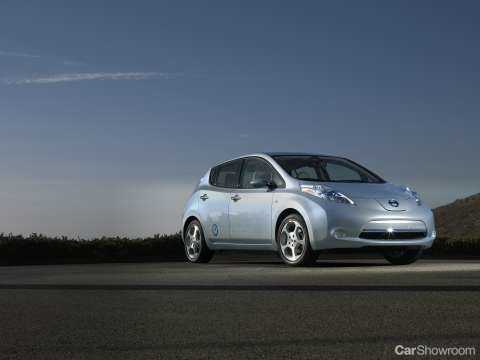
Nissan Australia plans to introduce the LEAF here in 2012 but – like Mitsubishi with its i-MIEV – some Government and infrastructure support is needed.
Where the pure Electric Vehicle (EV) LEAF is especially significant is its dimensions – it’s a clean-sheet-of-paper design for a roomy five-seater family hatchback.
“The Nissan LEAF is the world’s first competitively-priced, mass-produced electric vehicle from a mainstream manufacturer,” revealed Pierre Loing, Nissan’s Vice president of Product and Advanced Planning. “It is a serious car, a real car, and the right car for the times.”
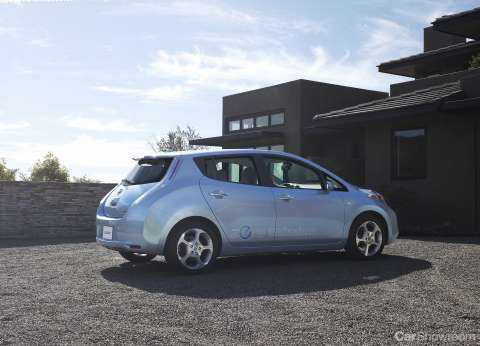
Nissan and its alliance partner Renault have a number of EVs on the drawing board – a delivery van, a small crossover SUV and possibly a motorcycle are under consideration – so it was important to make a bold, successful statement with the LEAF.
“Our car had to be the world’s first, medium size, practical SUV that motorists could afford and would want to use every day,” explained Masato Inoue, Product Chief Designer. “The styling will identify not only Nissan LEAF, but also the owner as a participant in the new era of zero-emission mobility.”
In Europe, initial sales will be to stakeholders, fleet operators and private customers – including rental giants Europcar and Hertz. Locally Nissan has signed agreements with the NSW and Victorian State Governments.
First LEAFs will emerge from Nissan’s plant in Oppama, Japan with an initial capacity of 50,000 units and by 2012, the innovative EV will also be manufactured a the company’s ultra modern facility in Smyrna, Tennessee. Nissan has already commenced battery production in Japan and plans future battery plants in Portugal, the UK and Smyrna.
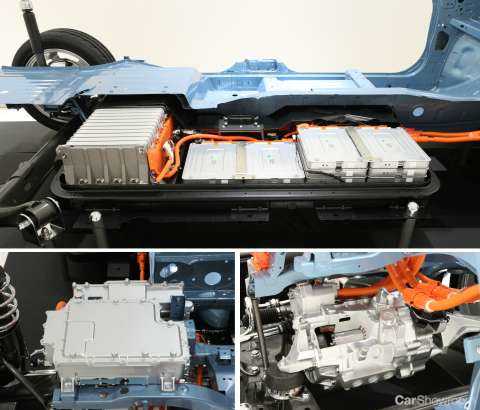
The 48-module lithium-ion battery is mounted under the seats and floor to provide power for the 90kW/280Nm electric motor which drives the front wheels. Using a DC 50kW quick charger, the battery can be charged to up to 80 per cent of its capacity in under 30 minutes while a full charge from zero to 100 per cent using a domestic 220-240V system takes eight hours.
With a normal driving conditions range of 160kms, a top speed of 140km/h and battery capability of 70-80 per cent even after 10 years, the LEAF really does make perfect sense for most urban motoring needs (even someone commuting daily from the NSW Central Coast to Sydney’s CBD could do so in a LEAF).
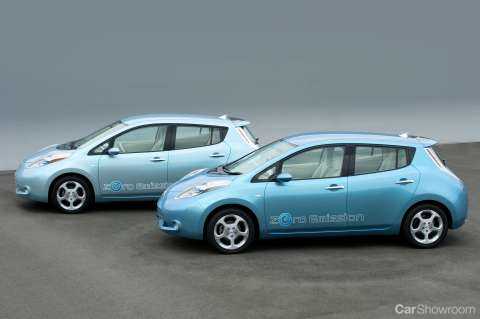
The LEAF is 4445mm long, 1770mm wide and 1550mm tall with a handy 2700mm wheelbase to accommodate five full-size adults in comfort.


