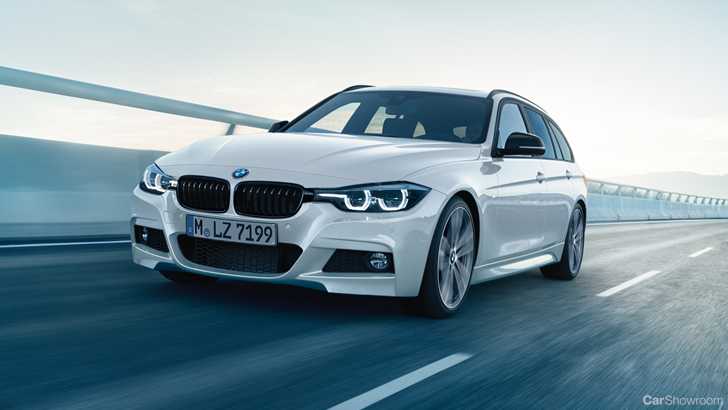
We’ll have our first glimpses of the next-generation BMW 3 Series (codename G20) somewhere around next year where it should be premiering at the Geneva Motor Show. However, another agonising round of months will have to pass before the world can sample the finished car, due to arrive in showrooms in 2019.
That does seem like a long way away, and yes that does mean that there’s no reason why the current F30 3 Series should be overlooked as it’s still comfortably the class leader in many categories. BMW, meanwhile, has revealed a little more about the incoming replacement, or at least the key goals Munich automaker wants to achieve with it.
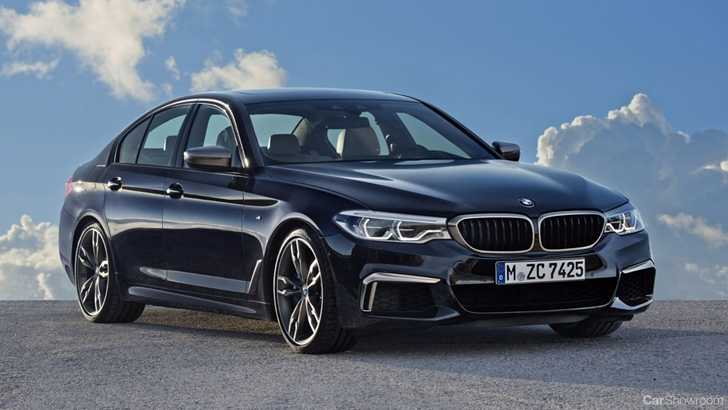
Chief among these priorities is to make the next car ‘their most refined model yet’, at least according to a recent and exhaustively detailed Autocar report. This would mean that it will even have to beat internal benchmarks such as the 7 Series and new 5 Series for overall refinement, and packaging those measures into a car as compact as a 3 Series while keeping prices level will require it to be an engineering masterclass.
Clearly, BMW is responding to the younger competition such as new Audi A4 (B9) and Mercedes-Benz C-Class - which, since ‘refinement’ is still a murky term - by most accounts generally provide a more cosseting and luxurious driving experience than the sportier-by-default 3 Series.
The report also details plans for the addition of two new M Performance models similar to the M550i and M550d that were recently revealed as part of the G30 5 Series range. Tracing the trend, we find the origins of these ‘sub-M’ cars among the M135i hatch and 1M Coupe. Higher-performance variants will be powered by larger six-cylinder engines and fill the gap between the standard range and the top dog M3.
Previously, BMW didn’t quite have a direct competitor for the Audi S4 quattro, a problem that’s exacerbated by the arrival of the mid-level Mercedes-AMG C-Class, the C43 4Matic. Both rivals are powered similarly powered by six-cylinder engines.
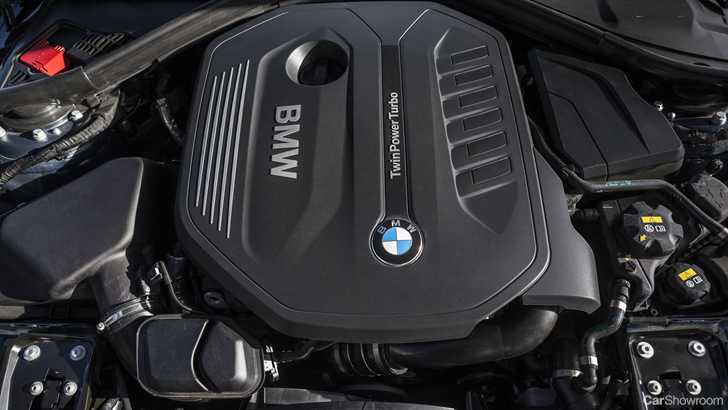
Ostensibly, the 340i will be rebranded as the M340i M Performance, but is confirmed to also include an all-wheel drive diesel version of that called the M340d xDrive. The 3.0-litre straight-six petrol engine won’t use the twin-turbocharger setup of the F80 M3 but rather the more conventional twin-scroll compressors in all of today’s standard BMWs, generating roughly 268kW. Meanwhile the diesel six will output around 238kW.
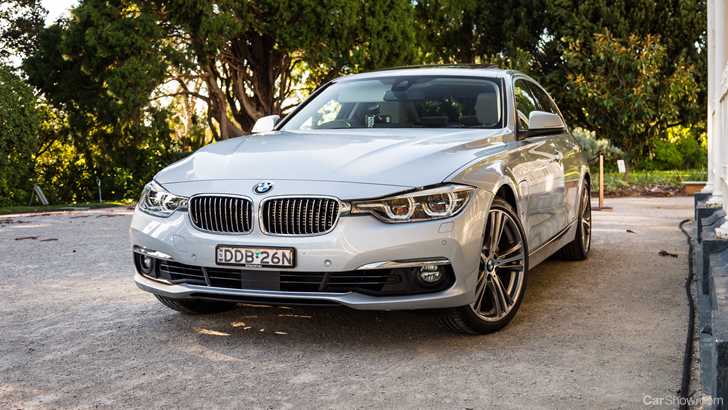
The next-generation 3 Series will be an overall larger car than the one it will replace, though not by much. Expansion of overall length and width should be minor but interior space should improve considerably. It should also be lighter (by 50kg) and more structurally rigid thanks to its CLAR architecture, which given the projected costs will not include the Carbon Core technology used in the 5 Series and 7 Series.
Most of the engines seen in today’s 3 Series range will be carried over to the next-generation car, and the bulk of the sales will be of those powered by either 1.5-litre three-cylinders or four-cylinder 2.0-litre motors, all turbocharged. Of course, they will all have undergone improvements to improve smoothness, efficiency, peak power, and power delivery.
What is unclear, though, is the extent to which BMW will expand their hybrid range. Currently, it’s only available in a single variant, the 330e iPerformance, but that’s expected to grow to at least two additional variants in the next generation car.
For more on BMW vehicles, including pricing and specifications, check out our Showroom.