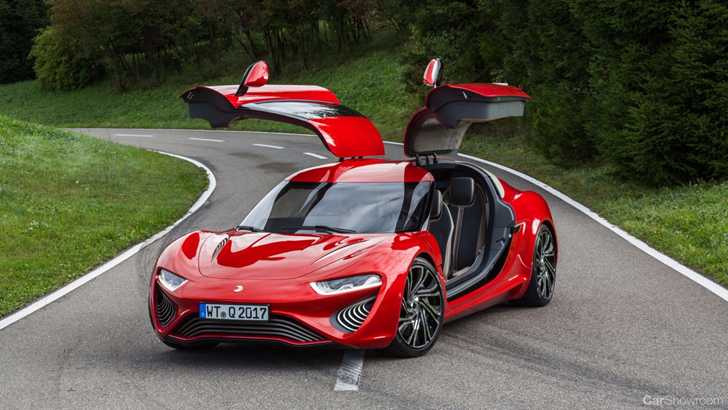
Nanoflowcell, a London-based research company that are the main proponents of liquid-battery technology to power vehicles and who have shown off two impressive working prototypes at motor shows, have announced that it is negotiating with a “large manufacturer that is not German” to mass produce their Quantino concept car, according to a report by Autocar UK.
This is very good news especially if it provides the company with the kind of funds and freedom necessary to realise the full potential of their already convincing method that could revolutionise the way cars are powered.
In simple terms, electricity is generated through the use of two separate ‘fuel’ tanks, each with either positive or negatively charged liquids. When the two electrolytic solutions passes through a membrane, electricity is generated to then power the vehicle.


And because these two easily stored and charged liquids are non-hazardous and easily manufactured, these cars can be ‘refueled’ just as quickly and easily as the cars of today with far less infrastructure change compared to what would be required to dot the landscape with electric fast charging stations which, with today’s technology, still needs much more time to replenish a typical EV battery.
The energy generated from this process is quite substantial too, able to supply enough charge to supply Nanoflowcell’s Quant E and Quant F prototype, a 686kW/2,900Nm low-slung four-seater gull-winged sports saloon, and its four electric motors for 600km (claimed range).


However, this ‘non-German’ large manufacturer that is in talks with Nanoflowcell is more interested in its smaller Quantino concept, which through its 101kW electric motor, has a claimed range of over 900km.
In the realm of possible outcomes following the steady but inevitable demise of combusting fossil fuels to power the personal mobility needs of us humans and our cars, battery-powered electric vehicles seem to be winning out.
Despite its apparent lead, there is no doubt that this approach has flaws - high-cost, very long charge times, the degradation of lithium-ion cells, the list goes on. Still, its popularity can also be attributed to the prevalence of personal electronic devices that use similar technology to store an electrical charge. For better or worse, we are all too familiar with these batteries.


There are proponents for other means to power our zero emissions future cars, hydrogen fuel cells being the most popular alternative, and in quite a dissimilar fashion, there is bio-ethanol which claims to balance out its carbon footprint through the planting of and replanting of the kind of greenery required to create it.
We hope to hear more from Nanoflowcell and their innovative approach to solving the post-combustion era fuel problem.