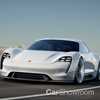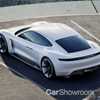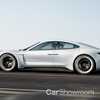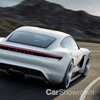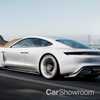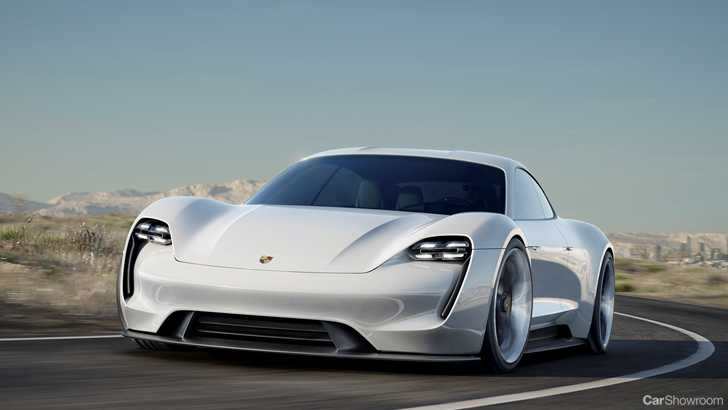
Here’s what you need to know about Porsche’s first-ever EV, the Mission E: it’s fully real, it’s coming in hot and it’s late 2019 launch is looking even more enticing from a value perspective. Granted we won’t know many details up until the final stretch prior to that roll out, but already it’s clear that Porsche isn’t thinking conservatively.
During the Frankfurt Motor Show, CAR Magazine had a word with Porsche’s CEO Oliver Blume, surely covering a number topics. However, his remarks on the Mission E are of particular note as it sheds light on a car that not only is the riskiest and most ambitious new car project the German company has undertaken in a long time, but is one that’s shrouded in mystery a full 2 years after the concept was initially unveiled.


The sporty looking four-door EV was always seen as a potential rival to the Tesla Model S, and given its launch timeline will most likely be competing with it or its eventual successor. However, the Mission E - if that’s even it’s final name - might not be a match for it in sheer size as Porsche is deliberately managing the car’s proportions to sit below that.
During the conversation, Blume likened the car occupying the chasm between the 2+2 Porsche 911 and the large four-door Panamera saloon. Of course, the car will only be offered with a fully electric powertrain, ostensibly being tiered based on battery capacity, power output of the electric motors (single or dual), and luxury equipment. How this will appear to the customer should be familiar to any Porsche observer with the hierarchy following the usual S, 4S, GTS variants.
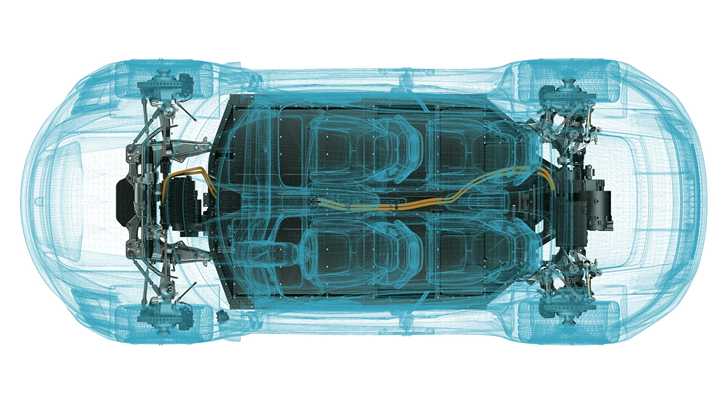
As was previously revealed, the car will be built atop an all-new platform designed specifically to accommodate electric powertrains. Batteries should be located within the car’s floor and as close to ground as possible for the lowest possible centre of gravity and positioned for perfect weight distribution. Back in 2015, Porsche set the benchmark at 500km for the car’s average range per charge. The body itself will likely use copious amounts of aluminium and carbon fibre to not add more to the heft of those power cells.
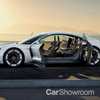
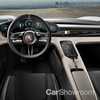
Should the interior layout closely follow that of the concept as we suspect it might, the Mission E’s relatively compact size will not mean a cramped interior. However, it will likely keep the strict four-seat layout seen in the concept, sans the suicide doors.
We should be able to confirm of axe that unknown soon as Blume also confirmed that the Mission E project is approaching its latter stages of development and will soon enter public testing, so keep an eye out for those B-pillars and rear seat count. It would be a slightly odd spectacle, though, seeing a Porsche absent of engine noise lap the Nurburgring - something Porsche says it will be able to do in less than 8 minutes.


What’s most surprising is the car’s projected price. Electric cars tend to cost more up front than their equivalent petrol/diesel burning counterparts, and despite the Mission E losing the size battle to the Panamera, we wouldn’t have been unexpected for the most advanced Porsche to command a higher price tag. But no, as the Mission E will be priced more affordably, or to use Blume’s phrasing: “like an entry-level Panamera”.
Expectedly, it will be as fast as a Porsche should, and definitely shaming any entry-level Panamera in acceleration. They claim the Mission E will accelerate to 100km/h in 3.5 seconds, which seems conservative, and will sail past 200km/h in around 12 seconds. Though with at least 447kW and vast reserves of instant torque, this hardly seems unfeasible even by today’s standards.
Porsche is indeed going all in with their electrification plans. It’s a near certainty now that the next-generation 911 range will feature some degree of electrification, and a fully electric version could be on the cards too if only as a proof of concept, much like Audi’s R8-based e-tron. Their Zuffenhausen headquarters and manufacturing facilities are expected to expand substantially, with the Mission E’s production set to create 1000 new jobs and a 700 million Euro investment.
For more on Porsche cars, check out our Showroom.