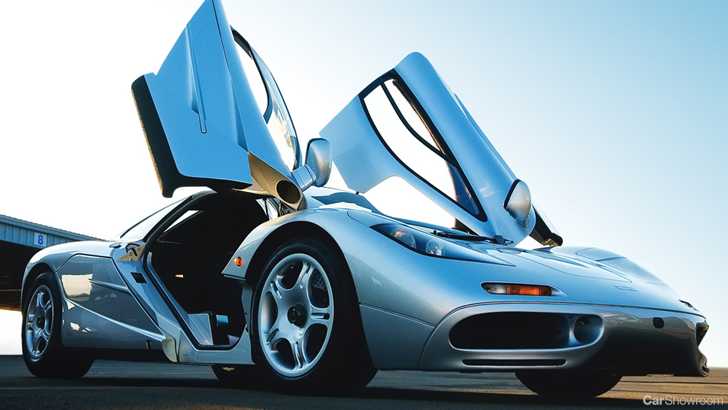
Although, it must be said, should it join the P1 in McLaren’s ‘Ultimate’ series of vehicle, the next F1 would most likely be too much car to join the crowd of supercars and would easily earn the rank of ‘hypercar’.
In fact, McLaren already has a whole tier called ‘Super’ which sits in the middle of its road car going vehicles, home to the 650S and 675LT. Those are very capable and ludicrously fast cars, but clearly the F1 doesn’t belong there either.
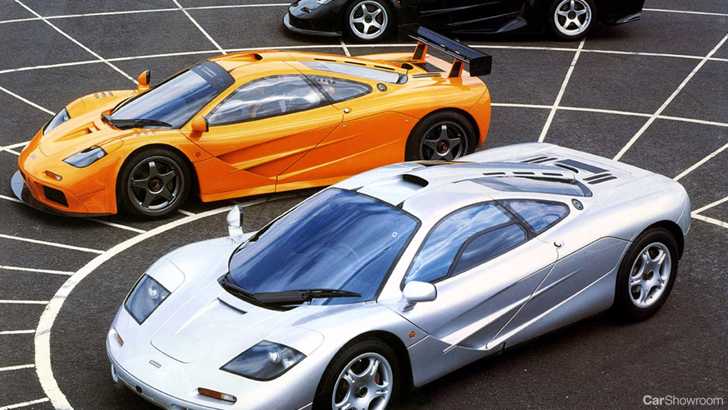
The F1, McLaren’s first road going machine, is a car that doesn’t really need much introduction, being one of the most advanced cars ever conceived and holding the record for the world’s fastest production car for close to a decade. Following that up, in any fashion, would be a monumentally tall order.
McLaren Automotive does agree, but doesn’t see the challenge as insurmountable according to an Autocar UK report that reveals a next-generation F1 is being developed and due to reach production by 2020 – a project being taken on by McLaren Special Operations (MSO).

The car, which they are aiming to serve to customers with hypercar-level performance but the drivability and comfort of a GT – one of the attributes that was so impressive about the original F1 – and is internally referred to as a ‘hyper-GT’.
The new car will, however, retain the famous 3-seat layout and dihedral doors that have now spread to every other modern-day McLaren car, only in the new F1 the openings will include parts of the roof, in between which will sit the roof-mounted air scoop.
According to an insider, “It applies the F1’s three-seat configuration to a different need: rapid, cross-continental travel with supreme speed and style. The result will be the most exquisitely crafted and luxurious road-going McLaren yet made.”


While the current 3.8-litre twin-turbo V8 has seen much use in various iterations within the McLaren stable, everything from the 570S to the P1, the Woking-based automaker will likely be sticking to what remains to be a very impressive and versatile powerplant, tuned to a rumoured output surpassing 700hp (522kW).
However, it isn’t known yet whether the next F1 will augment that engine with any electric drive like the P1. While insiders say that the car will be entirely petrol-powered, the argument for a hybrid powertrain isn’t so easily set aside.


The source continued: “The power-to-weight goal is to eclipse any other car with three seats or more. But at the same time, this will be the most refined McLaren ever sold.”
The next F1’s interior, too, will be a major focus for the company, being described as in a new league to anything McLaren has so far brought out. The cabin will have nods to the original F1’s cabin, which was quite spartan, while making new strides in comfort and luxury that’s “closer to a piece of art than a car”.
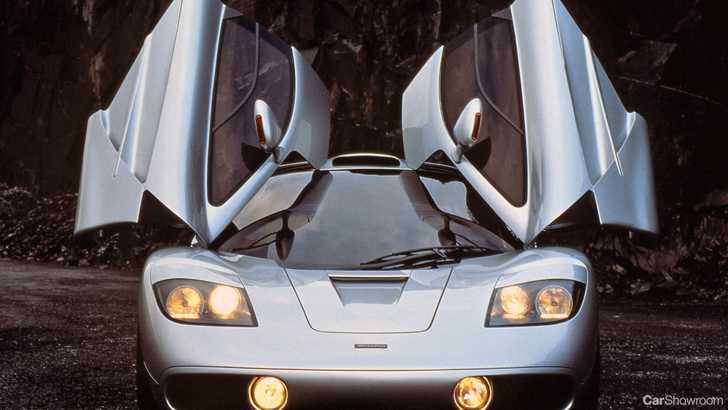
The new F1’s launch date is said to possibly be earmarked for 2018, the 30th anniversary of that fateful conversation between McLaren boss Ron Dennis and part-owner Mansour Ojjeh, technical director Gordon Murray, and marketing head Creighton Brown which ultimately led to the car’s creation.
For more on McLaren vehicles, including pricing and specifications, check out our Showroom.


