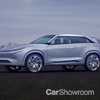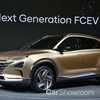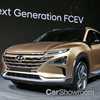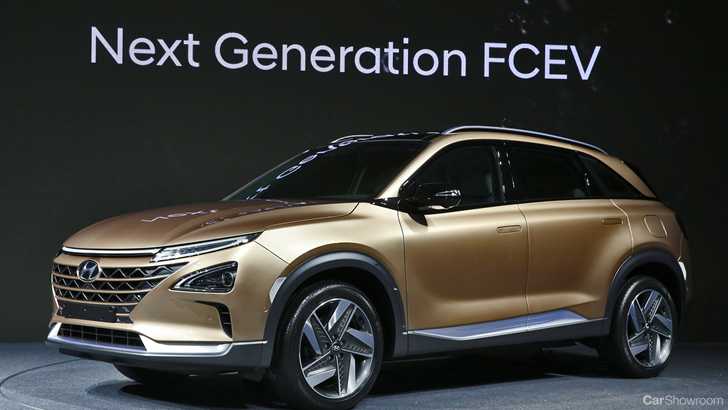
Call up hydrogen fuel cell vehicles and, assuming familiarity with the topic, marques like Toyota and Honda come to mind, maybe even BMW. However, Hyundai also has an ongoing and accomplished research and development effort to bring hydrogen-powered cars to the fore, and this SUV glimpse into their progress.
Like their previous versions, the fuel cell powertrain is housed within an SUV, most recent being the GV80 concept that debuted under their premium sub-brand Genesis at the New York Motor Show earlier this year as well as the Hyundai FE Concept shown at the Geneva Motor Show months later.
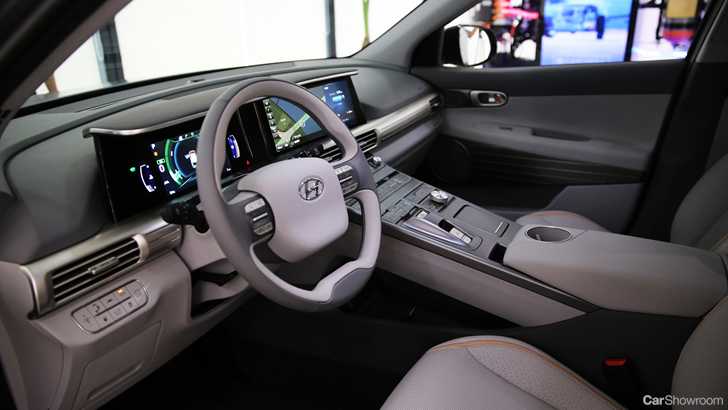
This Hyundai is actually already quite close to its production form with several development cars having undergone or are in middle of a real-world test programme to identify weak stress points and evaluate reliability. Some of this was even conducted locally, pitting it against the Snowy Mountains for cold-weather testing. In this show vehicle, there’s clearly some whiffs of their production models thrown in with deliberate cues to make it look more futuristic.
The outer aesthetic itself is heavily inspired by elements found in nature, muses Hyundai, embodying “pure and serene design” that “exhibits a confident, charismatic SUV stance” while reflecting its “calming presence on the road”, but it also has to be aerodynamic in order to not reduce range unnecessarily. Its door handles sit flush to the body, for example, while specially designed wheels, air curtain and air tunnel integrated into its D-pillar further reduces drag.
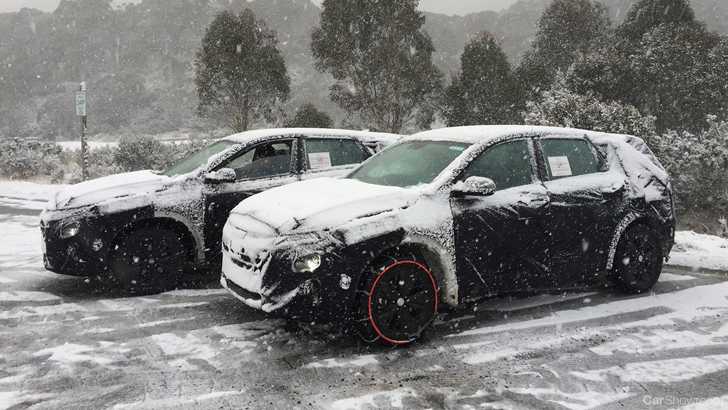
It also doesn’t have a name yet despite looking as complete as it does. Succeeding the ix35 Fuel Cell (or Tucson Fuel Cell in certain markets), Hyundai claims that it delivers “greatly improved” fuel cell performance and efficiency over that earlier model, specifically a 9 percent improvement that’ll allow it to travel 580km between refills.
Exactly. Refills, meaning that going any further would need only a couple of minutes at the hydrogen pump, just like in any fossil fuel burning car of today. No multi-hour or overnight charging here, and only water vapour as a by product of the energy extraction process that bonds oxygen atoms to the hydrogen to create electricity - something long boasted about as the unique advantages of hydrogen fuel cell cars.


This new Hyundai FCV (fuel cell vehicle) produces 119kW, a 20 percent improvement over its Tucson-based predecessor, and is now more durable as a bonus, even able to start at below freezing point (tested to as little as -30 degrees Celcius).
Hyundai’s roadmap for electrification, a category which this fuel cell SUV somewhat also falls into, has some short term milestones too. In the first half of 2018, they plan to launch a fully electric (battery powered) version of their Kona compact crossover with a range of 390km. In 2021, a fully electric Genesis model will debut, followed within the same year by a mysterious long-range EV that will manage to 500km between charges.
For more on Hyundai vehicles, check out our Showroom.