The journey from the South Korean capital of Seoul to the county of Pyeongchang in the southeast takes a about 2 and a half hours with a combination of highway as well as single and dual carriageway roads, one that covers approximately 180km.
Tens of thousands of vehicles will be inundating country’s roads on their way to the 2018 Winter Olympics and 2018 Winter Paralympic Games later in the year, so Hyundai has decided to beat the traffic and send a fleet of cars over there ahead of time.
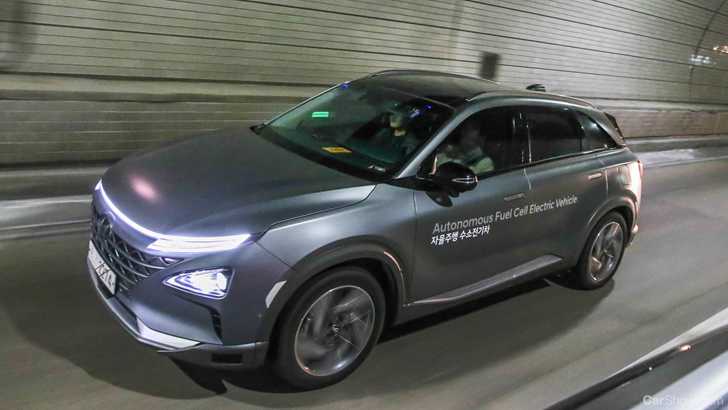
Only, this fleet is comprised of three of their NEXO SUVs, the same hydrogen fuel cell vehicle(s) that were unveiled at CES in Las Vegas a mere few weeks ago, while another two were Genesis G80s. Even more special is the fact that all these cars made the journey fully autonomously.
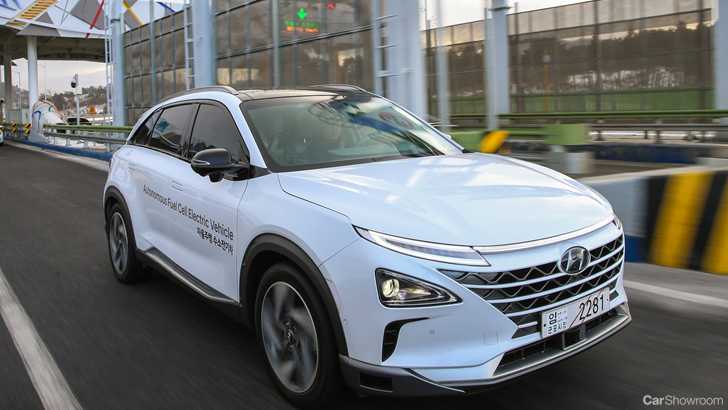
Hyundai is proud that this is the first time that FCEVs have been paired with Level 4 self-driving technology in a real-world test such as this, curiously fertile soil for such a landmark as you’d think hydrogen power would go swimmingly with the electronic energy demands of the on-board computational and sensory array needed to for fully autonomous driving.
Throughout the drive, all five NEXOs were reported to be comfortable at a highway cruise of between 100km/h to 110km/h, resounding quickly and appropriately to changing traffic patterns and unexpected circumstances. This is worth noting since typical (fully) self-driving trials are done at slower speeds with the driver required to bring the vehicle to a highway speed before allowing the tech to take back the reins.
“Hyundai’s philosophy for developing autonomous driving technology is to provide the highest level of safety combined with a high standard of convenience that our customers expect,” said Jinwoo Lee, head of the Intelligent Safety Technology Center at Hyundai Motor Group.
This demonstration proves that Hyundai does indeed have the potential to introduce high functioning Level 4 autonomous capabilities in lock step with other industry leaders, and proliferate them in their mass market vehicles sooner than most.
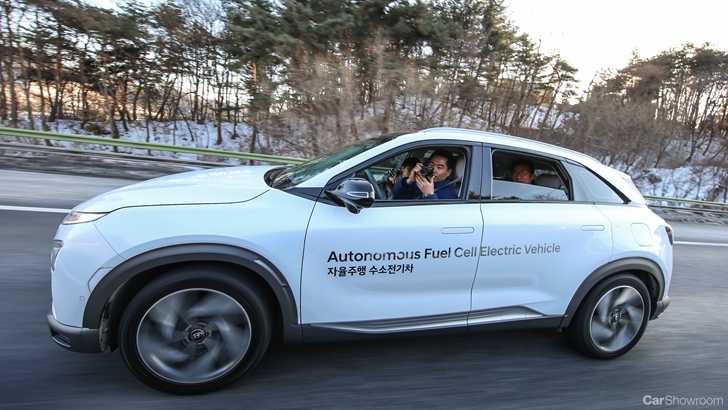
These NEXOs, which are due to go on sale as purchasable FCEVs in locales such as California where hydrogen refuelling stations are widespread enough to be viable alternatives to residents. Like others with similar powertrains, they use compressed liquid hydrogen to generate the electricity that powers the motors by combining the aforesaid hydrogen molecules with oxygen.
It’s zero emissions motoring with the only by-product being water, and gaining another 600km or so of range is as convenient as filling up a present-day combustion engine car at the pumps. And the larger the tank, the higher the range.
For more on Hyundai cars, check out our Showroom.