With LPG prices generally well below 50 cents per litre in Australia, the hybrid Elantra will dramatically lower fuel bills.
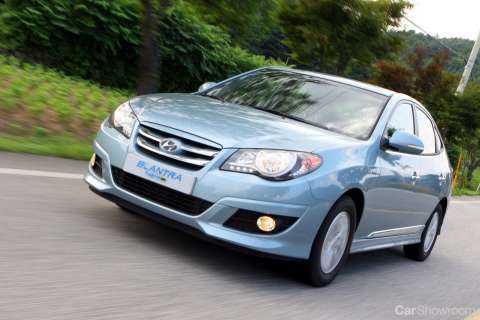
In recent years Hyundai Motor Company has introduced an impressive range of new vehicles but the Elantra LPI Hybrid Electric Vehicle (HEV) shows how serious Korea's largest car manufacturer is about making the future happen sooner. The hybrid Elantra will go on sale in Korea on July 7 under the name Avante
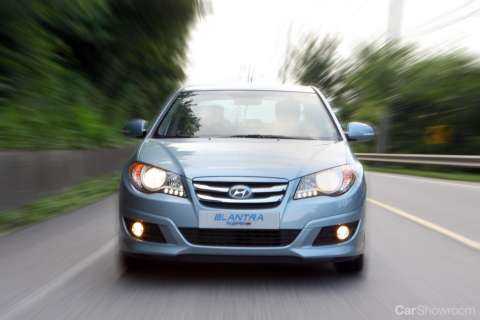
The unique feature is that this hybrid combines its 15 kW electric motor with an aluminium 1.6-litre Atkinson Cycle four-cylinder engine designed to run on LPG, which burns more cleanly than petrol or diesel. The Elantra LPI has a constantly variable automatic transmission, which also contributes to fuel economy with minimal efficiency losses compared with a conventional torque-converter type.
With LPG prices generally well below 50 cents per litre in Australia, the hybrid Elantra will dramatically lower fuel bills. Actual consumption is rated at 5.6 litres of gas per 100 kilometres, which equates to 4.5 litres of petrol. This represents a 47 percent improvement over a conventional 1.6 litre Elantra with automatic transmission.
It should be possible to drive from Sydney to Melbourne for a fuel spend of less than $30 compared with more like $70 for a typical four-cylinder petrol model.
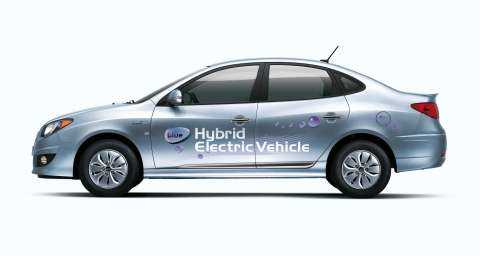
The Elantra LPI HEV qualifies as a Super Ultra Low Emission Vehicle, being 90 per cent cleaner than its petrol equivalent, while achieving the impressive figure of 99 g/km of carbon dioxide.
First shown in April 2009 at the Seoul Motor Show, Hyundai announced in June that it will accept pre-orders.
Elantra LPI Hybrid is also the world's first hybrid vehicle to adopt advanced Lithium Ion Polymer rechargeable batteries that have higher energy density, lower manufacturing costs, are more robust to physical damage and can also take more charge-discharge cycles before storage capacity begins to degrade than Lithium Ion Batteries. The technology and all key components in the Elantra LPI HEV have been developed by Hyundai and its local partners including the motor, battery and low DC/DC converter.
+Note: A mild-type hybrid is not capable of using the electric motor to propel the vehicle by itself. The electric motor works together with the engine to mobilise the car. A hard-type hybrid, or full-hybrid, provides assistance to the engine, but can also run in pure electric mode.
*Note: Compared to the more prevalent Otto Cycle four-stroke combustion engine, the Atkinson Cycle has a power stroke which is longer than the compression stroke and is widely adopted by designers of Hybrid powertrains due to the increase in fuel economy it provides.
Internal combustion engines can be divided into several categories according to the combustion principles: Otto Cycle, Miller cycle, Lenoir cycle, Atkinson cycle, Brayton / Joule cycle, Diesel cycle and Homogeneous Charge Compression Ignition.


