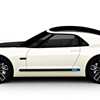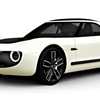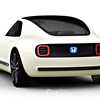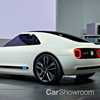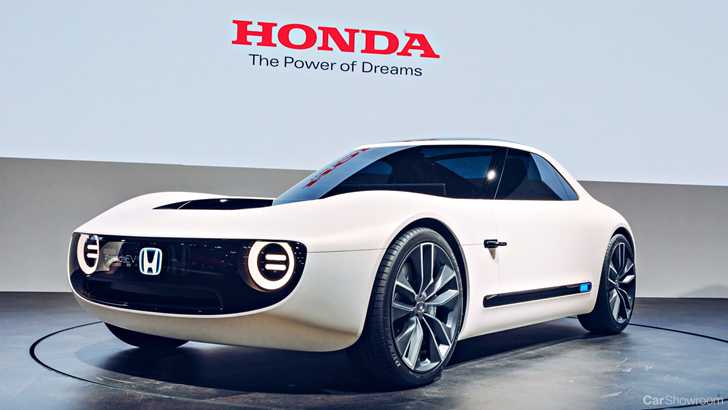
At the 2017 Tokyo Motor Show, Honda has pulled the wraps off an interesting twist on the everyday electric vehicle, plainly called the Sports EV. It’s worth keeping an eye on this car’s gestation because it signals interest from the automaker in a sportier mass market (EV) car, never mind that it’s only a concept for now.
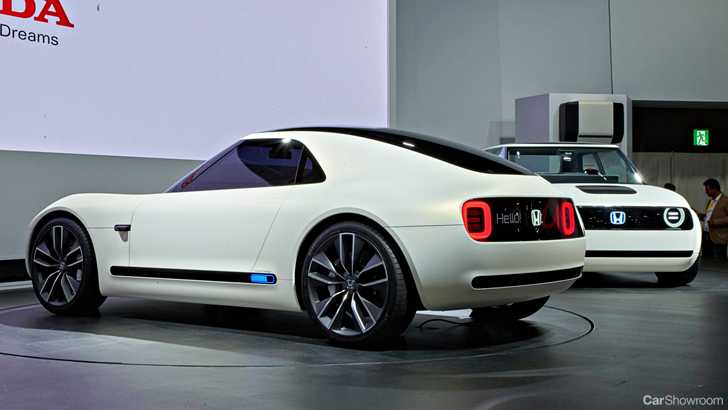
Certain aspects of its undeniably attractive exterior design are novel and indeed have manifested simply because its looks futuristic, likely without enough practical justification. Those rear-hinged ‘suicide’ doors and the fancy head- and tail lights that can also display messages and graphics, for example, might be victims of streamlining costs and axed as a result. All that said, it sure looks like it could well be headed for the showrooms.
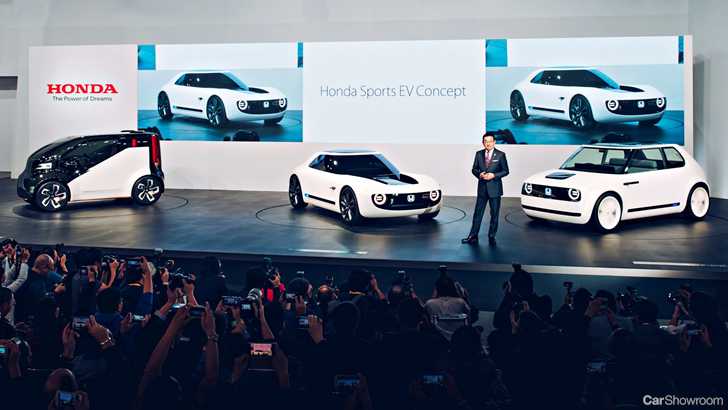
Honda, as first exhibited by the the Urban EV concept, is planning an electric vehicle offensive that’s set to play out over the next decade, and both these cars are heavily speculated as being this strategy’s arrowhead, underpinned by an all-new purpose-built platform. The company had already explored the realm of electrification, offering many hybrid variants of popular models past and present like the Jazz and Civic, culminating in the clever integrated powertrain used in the new American-made NSX supercar.
Should the Urban EV’s earmarked production schedule of 2019 be met, this arguably more exciting Sports EV could follow shortly after. And judging from the tiny mid-engine S660 and aforementioned NSX, Honda’s track record of following through on delivering sports-oriented cars that originated as concepts is an encouraging one indeed.
No official dimensions for the Sports EV have been mentioned, but just eyeballing its proportions suggest that Honda is using an elongated wheelbase compared to the related Urban EV. Overall length has also risen, by the looks of it. In terms of specifications, again, none have been actually put on the record.
However, the automaker’s language in describing their Urban EV concept unveil and the fact that both these cars are so closely related under the skin, also bearing in mind that it should be introduced with a new type of lightweight, energy-dense battery, a projected range of 320km on a single charge should be about where Honda are aiming.
Despite this supposed new-generation battery, the compact dimensions of the Sports EV means that only so many cells can be shoehorned in between the front and rear axles. Dual electric motors could be on the cards here, but in the pursuit of a fun drive, we suspect that both will be assigned to pushing power to the rear wheels rather than having it adopt an all-wheel drive layout.
After all, one of those early morning journeys (as they are advertising) to a secluded coast would really suck if the car runs out of juice for the trip back and leaves you stranded between some rocks and a wet place.
For more on Honda cars, check out our Showroom.