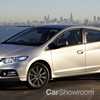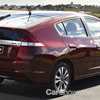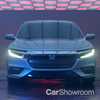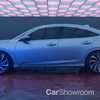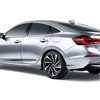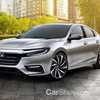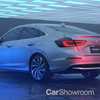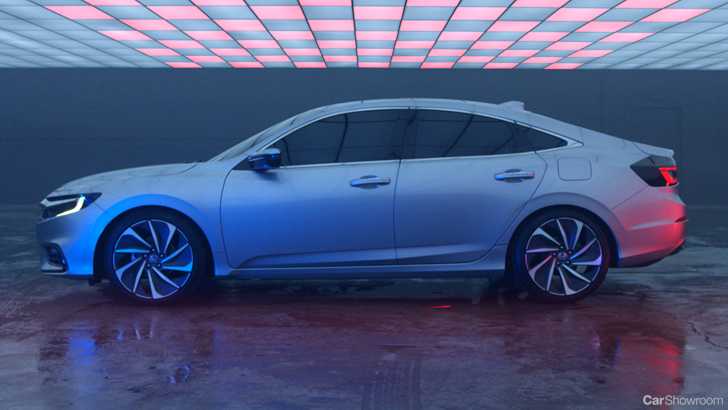
The new Honda Insight, recently revealed in ‘prototype’ form and current Civic share quite a few things. A common platform, for starters, resulting in a shape that yields more than a few points of resemblance. But why had they not just repeat their previous M.O and create a Civic Hybrid variant?
Apparently, the distinction between the Civic and Insight was quite deliberate in spite of there being an ‘easier’ solution. While a hybrid variant of the current 10th-generation Civic could have existed of this, and at a less marketing and engineering expense, a top company official at American Honda revealed to WardsAuto that doing so would dilute the Civic’s fun spirit. Thus, the third-generation Insight was born.
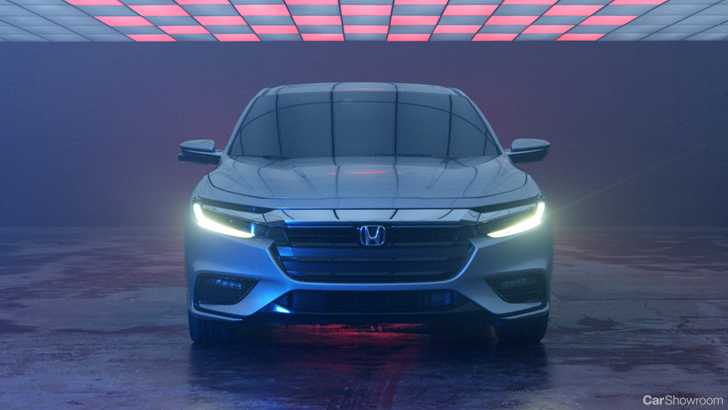
As Henio Arcangeli, senior vice-president of the Automobile Division, explained: “The Civic is lightweight, sporty, fun-to-drive, and if you electrify the Civic I think you kind of take a lot of the character away, so it was a smarter idea to bring back an older nameplate from before and make it kind of a whole new vehicle.”
Compared to the previous Insight, this new versions is a much easier object on the eyes as well managing to tackle many of its predecessor’s criticisms. Obviously, too, was the engineering goal to have the new Insight be indistinguishable to the ownership experience of a normal four-door sedan. It will, of course, have a clever hybrid powertrain and offer efficiency plusses that normal cars can’t, but makes nearly no attempt to overtly express this nature in both visuals and the driving experience.


In terms of positioning, there’s reason to believe that Honda was aiming at slotting the Insight in between the Civic and Accord, wishing to brand it as a “premium compact” option that just happens to be a hybrid, with a larger cabin, matching luxury appointments, and more advanced technology features. This is a marked departure from the previous Insight, which lobbed as more of a value-driven package.
Interestingly, Honda still has not released firm powertrain specifications, though an educated guess would have the automaker use their 1.5-litre L15 four-cylinder sans turbocharger and running the more efficient Atkinson combustion cycle as the main means of propulsion, supplemented by a driveline-mounted electric motor fed by a lithium-ion battery bank located under the boot floor.
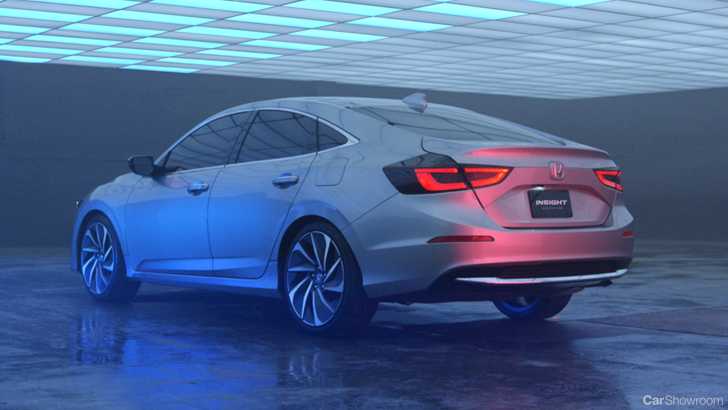
As before, the both motors will work continuously in parallel with total output likely to be comparable to the more powerful turbocharged Civic variants (127kW or thereabouts). Prior to reaching the actual wheels, drive will be channeled through their Earth Dreams CVT or new 7-speed Sport Hybrid Intelligent Dual Clutch Drive (i-DCD).
For more on Honda cars, check out our Showroom.