


The 2017 Honda NSX is the most technologically advanced car to come out of the Japanese marque in, probably, ever. Never mind that it was manufactured in the United States and a lot of the development work done there as well.
The fact that it balances a lot of seemingly contradictory goals is an amazing feat. The extra and immediate power and torque afforded by the electric motor require batteries, which add considerable weight. Those components need to fit alongside a gasoline engine, but spaced far enough for cooling and weight distribution reasons. The body also has to be slippery but generate meaningful downforce at speed – those kinds of things.
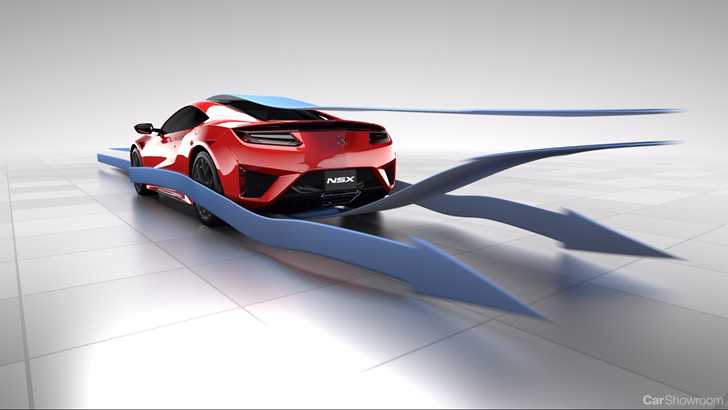
A core concept applied during the NSX’s development process is the idea of ‘total airflow management’, which in a nutshell means that every ounce of air flowing over, under, or to the side of the car is put to good use to either generate high-speed stability and/or cool the various high-stress components.
Thomas Ramsey, Honda’s NSX Aerodynamics and Cooling Project Leader, said: “In many ways, with the design of the all-new Honda NSX, you literally have form following function, so as an aerodynamicist, this was a really exciting vehicle to work on. To meet the challenge of the ambitious performance targets, innovative packaging design and dramatic styling, Honda’s engineers had to totally re-imagine the exterior engineering for this modern supercar. This new ‘total airflow management’ strategy supports component cooling and aerodynamic performance while also contributing to even more dynamic styling.”
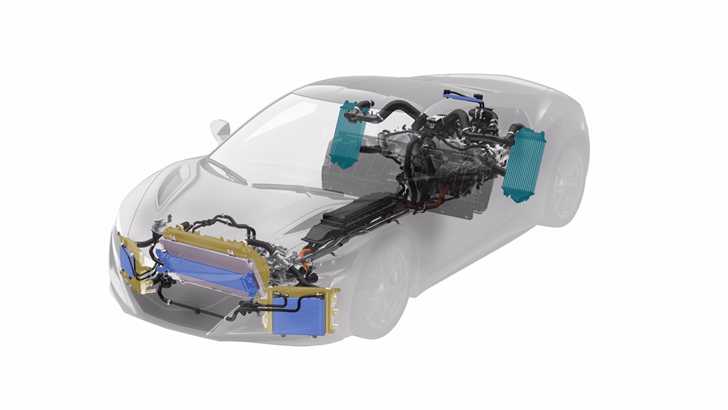
The cooling solutions the team found are of particular interest. The NSX has seven primary seat sources: the engine itself (a 3.5-litre V6), two turbochargers, transmission, Power Distibution Unit, and the two electric motors that are each assigned to a front wheel. All these separate needs had to be met, a challenge to which Honda sectioned as 10 separate heat exchangers.
Air inlets at the front of the vehicle supply airflow across heat exchangers located within the front section (front engine radiators, twin motor unit cooler, condenser, transmission gear cooler and hybrid Power Distribution Unit). Air flowing over the roof and down the rear hatch glass, however, is captured to feed the transmission clutch cooler and further facilitate engine bay cooling.
Fascinating.
For more on Honda vehicles, including pricing and specifications, check out our Showroom.


