Holdens New SIDI Sets New Benchmark For Fuel Efficiency
No Australian manufacturer has learnt as many tough lessons as Holden. From a great start in 1948 and astonishing sales success through the 1950s, 1960s and into the 1970s, General Motors' wholly owned local subsidiary has come to realise that buyers won't automatically put their money down just because the badge reads Holden. Or even because it reads Holden Commodore.
Three years after the launch of its current VE model, Holden has launched a major upgrade. But this one is not marked by a new radiator grille or revised tail lights. Externally, the only differentiating feature is a new badge that reads SIDI and that is the whole story.
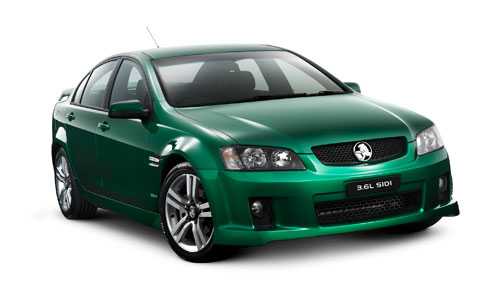
SIDI stands for Spark Ignition Direct Injection. Hardly charismatic. But the message beneath the acronym is of immense significance because this Holden Commodore consumes up to 15 per cent less fuel than its outwardly almost identical predecessor, while offering strong performance and a significant gain in refinement. According to company executives the company's priorities, in no particular order, are fuel economy, fuel economy and fuel economy.
There is a case to be made that the company did not pay sufficient attention to this vital consumer concern in developing the VE. But the move to redress that car's formerly lacklustre economy is a decisive one.
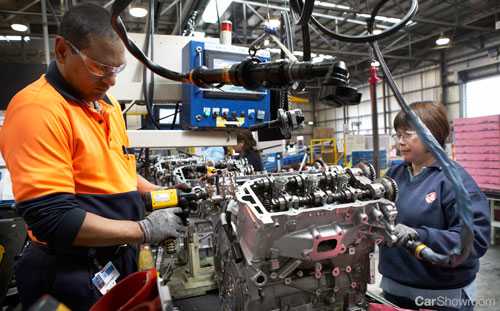
The existing 3.6-litre version of the Alloytec Global V6 has been revised to incorporate the new direct injection technology, while a new 3.0-litre version has been developed. This is the smallest capacity engine to power a Commodore since the Nissan 3.0-litre straight six of the VL era (1986-1988). But there is no sense of the 3.0-litre being marginal. Rather, it adds a newfound feeling of refinement with a nicely tuned exhaust note. Enthusiasts will prefer it even to the revised 3.6, which is smoother and more melodious than its predecessor but not quite a match for the smaller capacity engine. It seems likely that the 3.0-litre V6 will become the mainstream Commodore unit.
It is now 30 years since the second international oil shock focused the minds of Australian car industry executives on the issue of fuel economy. The first series Holden Commodore had just gone on sale and so had the Ford Falcon XD. While the Holden matched the Falcon on length, it was lighter and narrower. (The Ford advertisements were stressing the importance of extra width in the interior.)
Which car would appeal more to Australians, given the sudden new emphasis on fuel economy? Ford Australia executives were close to panic, with many convinced that the Falcon was now too big. How could the Falcon compete with the new, smaller European-style Holden?
With petrol rationing, sales of six-cylinder and V8 cars slowed almost to a standstill. Values of used examples plummeted. But both Holden and Ford were reliant on their mainstream models for profitability. They were committed to building these new cars for at least the next few years.
It seemed that Holden had the upper hand. The compact Commodore with its modern European styling was apparently the right car for the time…except that it had to make do with the same old-fashioned engines used in the Kingswood. Despite the lighter weight of the Commodore, these engines were still heavy on fuel. The market perception of a more efficient vehicle was not matched by real world performance: the Commodore, despite its svelte looks, was a gas-guzzler!
The Falcon engines were not much better but some marketing genius at Broadmeadows saw an opportunity. By fitting the smaller 3.3-litre six with the tallest optional gearing, an impressive fuel figure could be achieved. The Falcon could return a better figure than an equivalent 3.3-litre Commodore. The fact that the overwhelming majority of Falcons used the 4.1-litre six was conveniently ignored. This was the beginning of a reversal in the sales charts that saw the Falcon outsell the Commodore because Ford Australia had successfully created the perception that this bigger, more spacious car used no more fuel than the 'cramped' Commodore.
When Holden fitted the awful 'Starfire' 1.9-litre four-cylinder engine to the Commodore in 1980, the problem was confounded. So gutless was the Commodore Four that most prospective buyers ignored the promise of somewhat improved economy. It helped to confirm the market's preference for six-cylinder models. When the fuel crisis cleared, which it did within a year of the Commodore Four's debut, buyers stayed with the Falcon. By that time Ford had its much vaunted 'Alloy Head' to build its fuel economy credentials further.
And so the argument had been turned right around. If the traditional-sized Aussie family sedan (or wagon) uses no more fuel than a smaller, more cramped car, why would you buy that smaller vehicle? Holden's only answer was to create a bigger Commodore but that car would not arrive until 1988 in the guise of the VN.
From 1982 until the arrival of the VN, Ford Australia led the market. By the mid-1980s Holden had to reinvent not just the Commodore but itself, almost going bankrupt in the process.
Excruciating lessons have been learnt. This time around, Holden, too, is using the bigger-is-better argument employed to such great effect by Ford Australia in the 1979-1988 time frame.
And this time around, when concerns about fuel economy would seem to be permanent, Ford, not Holden, will offer a four-cylinder variant. But unlike the anaemic Starfire Four with 58 kW, this will be a turbocharged unit cranking out some 170 kW. That's about what the 5.0-litre Holden and Ford V8s of the early 1990s developed!
Ford Australia's big problem is that this engine is still more than a year into the future. But Holden has its direct injection technology right now while, figuratively speaking, Toyota will have the Camry Hybrid tomorrow.
How will the marketing gurus at Ford Australia deal with these new challenges in the period before the four-cylinder Falcon comes onto the scene? There is no doubt there will be, at the very least, a marketing response. But with direct injection making such a radical improvement to Commodore economy, it looks as if even more pressure will be applied to Falcon sales.
Holden will also be targeting the makers of smaller, four-cylinder models. Holden's latest direct injection V6 engines allow the Commodore to achieve fuel economy the same or better than many of these.


