Ford introduces the replacement to its Duratorq line of diesel engines starting with a 2.0-litre unit of its new EcoBlue mills.
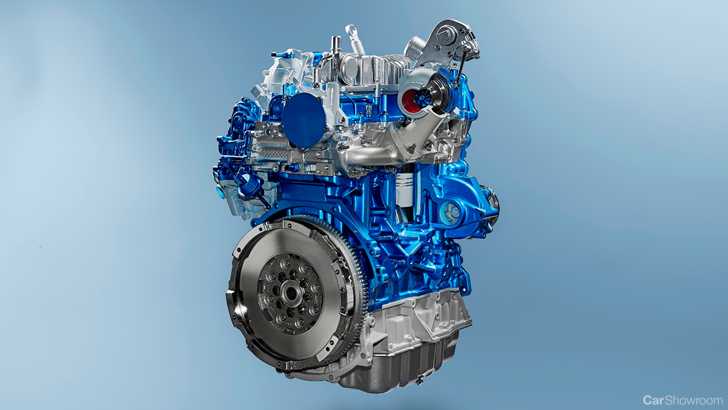
Ford has rolled out their new line of EcoBlue turbodiesel engines starting with a 2.0-litre four-cylinder unit that should find their way into duties currently occupied by Ford’s current 2.2-litre Duratorq four-cylinder units like those found in the Ford Ranger.
These new engines, Ford say, are the result of a sizable engineering effort in a time where diesels are on the downswing in the public mind. Some headlining innovations include a clean-sheet design to reduce friction, an off-set crank, belt in-oil, and the use of Ford’s first ever modular camshafts. All these result in a 13 percent fuel efficiency gain.
The 2.2-litre Duratorq has since its 2005 introduction led a very varied life, powering the gamut from Ford’s commercial vehicles to various vehicles within the JLR group such as the Land Rover Defender and the Jaguar X-Type.
Ford has endowed their new EcoBlue diesel burners with the know-how gained from its EcoBoost line of petrol engines. In addition to the efficiency increases and emissions decreases that comply with the strict Euro Stage Vi standards due to be introduced in September 2016, the EcoBlue engines are designed to deliver more power over wider spread, with a focus on low-end urgency.
In a 2.0-litre capacity, Ford says the new engine should deliver up to 340Nm of torque as early 1,250 rpm courtesy of an all-new compact turbocharger utilising an aerospace aluminium construction. Total power/torque output isn’t fixed and will surely depend on tune and specific vehicle requirements, although Ford posits a range of 100PS to 240PS (74kW to 176kW) – specifically: 105PS, 130PS, 170PS, with more powerful versions soon to come along with a 1.5-litre EcoBlue variant.
Ford also wishes to boast that the new 2.0-litre EcoBlue mill will the be first ever diesel engine to have passenger car-level NVH (noise, vibration and harshness). That offset crank design mentioned earlier was designed to minimise piston side-load, reducing rubbing forces against the cylinder walls of the downsized four-cylinder iron block.
“The basic structure of an engine can act as a soundboard for the movements happening inside it, just like a bell. So we try to develop a bell that does not ring very well,” said Dominic Evans, NVH specialist, Ford of Europe. “We’ve engineered every significant noise-influencing component of this engine to be quieter and smoother operating – resulting in the most refined diesel commercial vehicles Ford has ever built.”


