No power vacuum to report.
The highly-secretive atmosphere at electrics company Dyson let out a little bit of air recently, after the company confirmed the departure of a senior executive involved in its electric car project. This comes as a surprise after Dyson had managed to snag some of the most prominent talent in the automotive and electrics scene to join the project, which is being funded by the company to a tune of two billion pounds.
Ann Marie Sastry joined the team at Dyson after the British company bought her battery company, Sakti3, for some US$90-million a couple of years ago. While her exact field of expertise in the project was never disclosed, nor her achievements while employed there, Sastry did mention it several times that the company was very, very close to getting solid-state batteries onto the market. With solid-state cells, Dyson would have been able to launch onto the market and immediately surpass the range, recharging times, and overall electrical efficiency of its rivals. Sastry's departure was confirmed to UK publication Autocar.
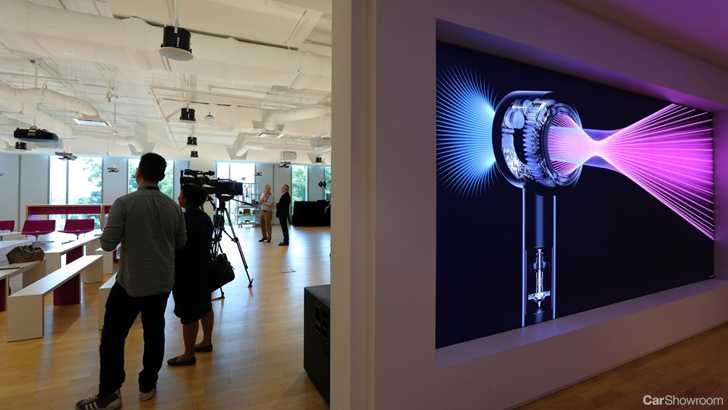
Dyson first went public about its intent to break into the battery-electric vehicle market back in September, when Dyson CEO Sir James Dyson sent out an email explaining the project in detail. The project presently employs a workforce of some 400 people, as part of a £2-billion investment that should see the project come through successfully. The CEO then took a jab at international governments that are pushing for ‘clean diesel’ engines, saying that the term is “oxymoronic.” He then revealed that in 1990, the Dyson company had begun developing a diesel exhaust emissions capture device that later didn’t get adopted by the industry because they felt that it would inconvenience customers too much.
“By 1993, we had developed several working prototypes and showed an early iteration to British television programme Blue Peter. the team went on to develop a much more sophisticated technology. To our chagrin, nobody at the time was interested in employing our diesel exhaust capture system, and we stopped the project. The industry said that “disposing” of the collected soot was too much of a problem! Better to breathe it in?” — Sir James Dyson, CEO, Dyson
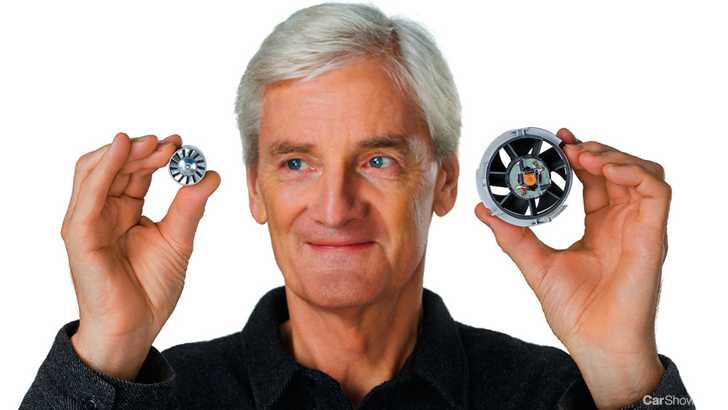
Fuelled by passion, Sir Dyson wants to reduce pollution at its source, and has recruited executives from Aston Martin and Tesla to push the project further along. David Wyer and Ian Minards moved from the former company into near-identical positions at Dyson (head of procurement and head of product development, respectively), while Ricardo Reyes relinquished his post as Tesla’s communication boss earlier this year to join the team at the Wiltshire-based company.
Talk about a Dyson EV has been around for the better part of the decade, and we suspect that the timing of Dyson’s entry has a lot to do with the recent advances made in battery technology. The company is excited, naturally, with Sir Dyson saying:
“I committed the company to develop new battery technologies. I believed that electrically-powered vehicles would solve the vehicle pollution problem. Dyson carried on innovating, and at this moment, we finally have the opportunity to bring all our technologies together into a single product. We’ve started building an exceptional team that combines top Dyson engineers with talented individuals from the automotive industry. The team is already over 400-strong, and we are recruiting aggressively.” — Sir James Dyson, CEO, Dyson
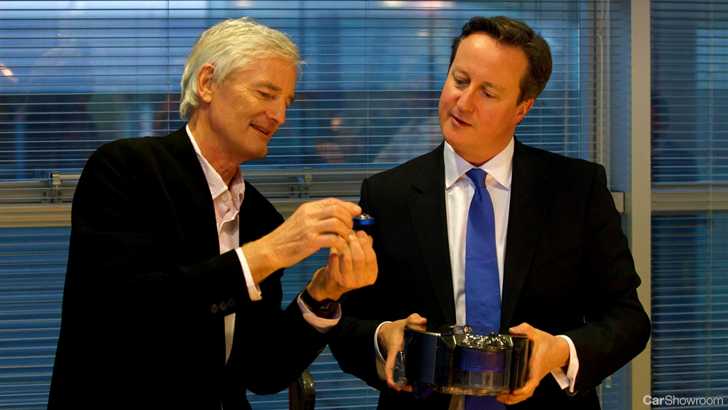
A surge of chatter around a Dyson electric vehicle came about when earlier this year, a UK government document revealed that they were “funding Dyson to develop a new battery electric vehicle.” Not long afterwards, the document was amended to say that they were “providing a grant of up to £16-million to Dyson to support R&D for battery technology.” Sneaky.
Stay tuned to CarShowroom as we bring you more updates as they come.


