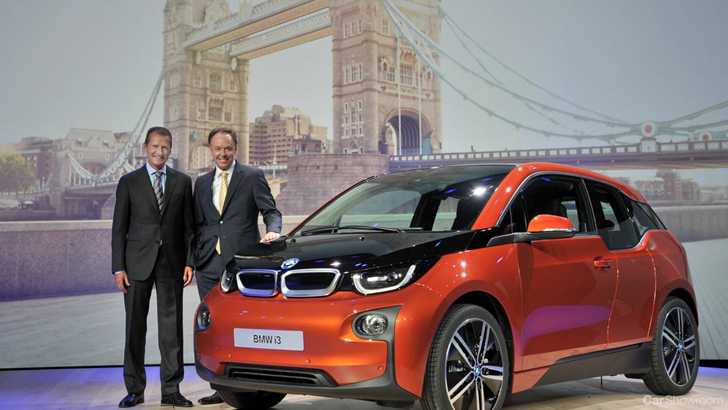
After one of the longest build-ups in automotive history, BMW’s ground-breaking i3 has been launched in Europe.
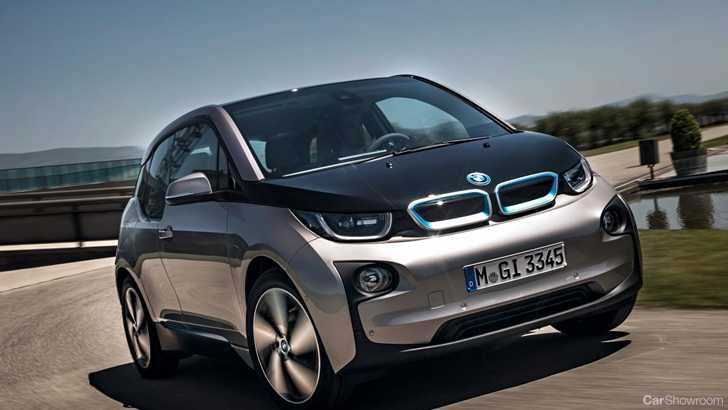
BMW’s first electric vehicle is the first model of the ‘BMW i’ sub-brand which BMW says: “Stands for visionary vehicle concepts, inspiring design and a new understanding of premium that is strongly defined by sustainability”.
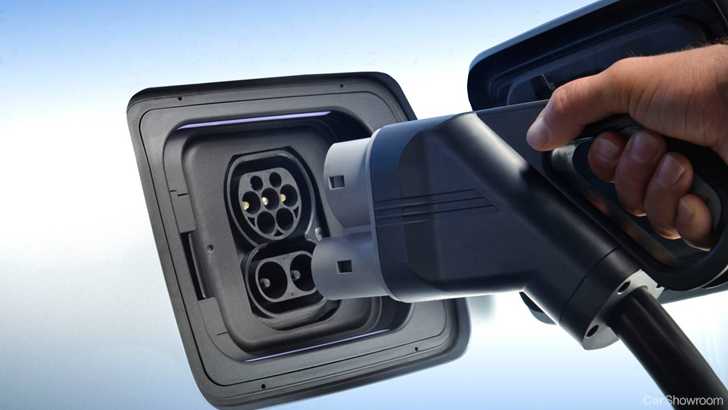
Boasting a passenger cell from lightweight carbon-fibre-reinforced plastic (CFRP) and a 125kW/250Nm electric motor driving via a single-speed transmission, BMW says the i3 delivers the brand’s hallmark driving pleasure in a zero-emissions vehicle. Owners can re-charge at home via a BMW I Wallbox or on the road at a public recharging stations and the BMW i3 affords a maximum range between charges of around 160kms.
The so-called LifeDrive structure (the CFRP cell) is the first in mass-production and helps the BMW i3 to weigh-in at just 1195kgs (1365kgs for the Toyota Prius hybrid).
Some of the carbon structures are visible in the bodywork (showing-off the i3’s high-tech construction) and the first zero-emissions Beemer measures 3999mm in length, 1775mm in width and stands 1578mm high.
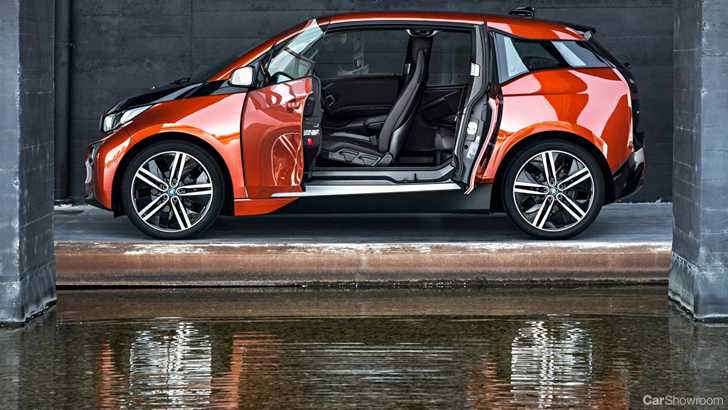
On the outside, the black belt running from the bonnet and over the roof will become a signature feature of BMW i models and the CFRP structure negates the need for B-pillars (hence easier access to both seating rows) and also allows for flush fitting of the large side windows. The tailgate is all glass and the front – naturally – features a new interpretation of BMW’s ‘kidney’ grille and distinctive headlights bordered by U-shaped LED lights.
Open the coach doors and the BMW i3 reveals plenty of space (there’s no centre driveshaft tunnel) and materials sourced from renewable sources – treated leather, timber and wool. Lightweight seats feature thin backrests, the driver has a raised position for optimized viewing and the gear-lever is mounted on the steering column. Specifications vary according to the i3’s model range – ‘Loft’, ‘Lodge’ and ‘Suite’.
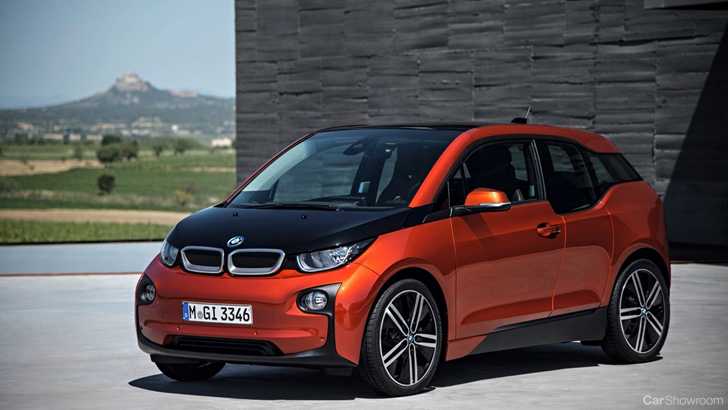
On the options list is a 25kW 650cc two-cylinder petrol range-extender engine (same principle as the Holden Volt) which lifts the i3’s range to 300kms.
Parts of the story behind the i3’s driving dynamics include an even 50:50 front/rear weight distribution and low centre of gravity courtesy of under-floor storage for the lithium-ion battery units. Development of the electric motor, electronics and battery have been done in-house under the auspices of the BMW eDrive program.
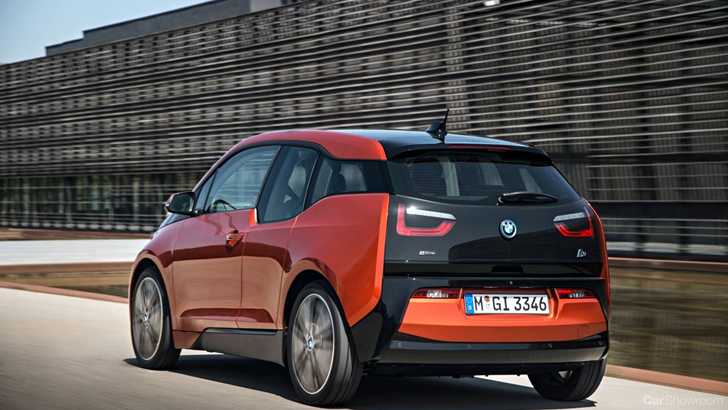
The BMW i3 rides on 19-inch or 20-inch light alloy wheels with low rolling resistance tyres and with a compact 9.86-metre turning circle will be right at home in CBD confines.