Although currently based in Germany, Audi’s ‘Travolution’ project addresses a global fuel consumption and pollution issue.
While politicians and environmentalists can score an easy media grab hammering vehicle manufacturers for fuel consumption and pollution -and despite the development of hybrid-powered vehicles - the fact is, government-funded infrastructure plays a major role.
City gridlock on clogged roads, cars idling at traffic lights and burning fuel accelerating between one red light and another are situations familiar to many Australian capital city motorists. These frustrating situations are major fuel-wasters and contribute to urban air pollution.
A better plan all-round would be for more investment in infrastructure, better roads and better co-ordination of traffic flow via linked traffic signals. But that isn’t going to happen any time soon, so Audi’s ‘Travolution’ project once again sees an automotive company leading the way.
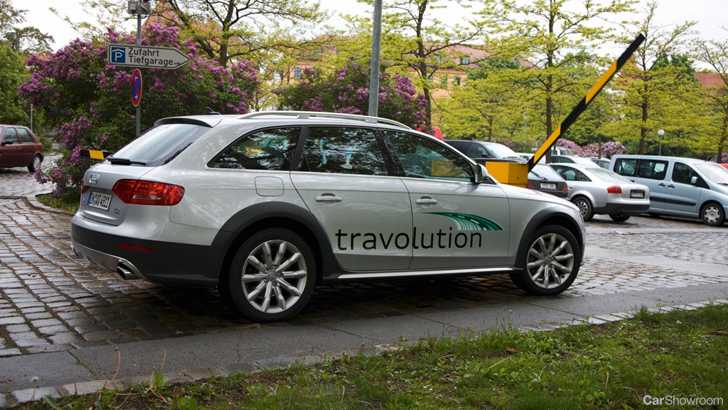
‘Trvolution’, currently under trial in Audi’s home town of Ingolstadt, is a system of electronic dialogue between cars and traffic signals which cuts the amount of time motorists sped at a standstill or accelerating – reducing fuel consumption and improving air quality.
First tested in Ingolstadt in 2006, the system saw immediate and dramatic improvements with fuel consumption cut by 17 per cent, saving 700,000 litres of fuel annually.
Audi developed the system and its secret is an adaptive computing algorithm that controls the traffic signals in Ingolstadt.
For example, the traffic signals transmit data which is processed into graphic form on the car’s dashboard, advising what speed to adopt so the next traffic signals will be green by the time you arrive.
If the car is stopped at a red light, information is transmitted via the car’s computer on how long the driver will have to wait before it switches to green again. Or, if the car approaches a traffic light which is about to change to yellow or red, the driver is warned by a visual or acoustic signal, or by a brief interruption to the flow of power from the engine.
When the car is part of the network, the time spent stationary, idling is reduced, saving the 0.02 litres of fuel burned on average sitting at a red light.
Audi says the potential improvements from the system are enormous. If ‘Travolution’ was adopted nationally in Germany, exhaust emissions could be slashed by two million tones of CO2 annually (about 15 per cent of the national total).


