New flagship limousine gets smart about weight management.
Audi is a firm known to favour evolution rather than evolution. The biggest saloon car out of Ingolstadt, the A8, has remained especially firm on this ideology, with every iteration moving into the future without being so radical that it may forget the past. But with the current generation getting a bit long in the tooth, it’s time that a new model takes the reign.
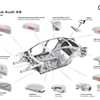
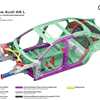
Like the car it will replace, the D5-generation Audi A8 will gain a little more weight over its predecessor, in the mould of how the D4 model got a little porkier over the previous model too. The flagship A8 will retain the Audi Space Frame construction, which will now employ a mix of aluminium, steel, carbon fibre, and magnesium to keep weight down.
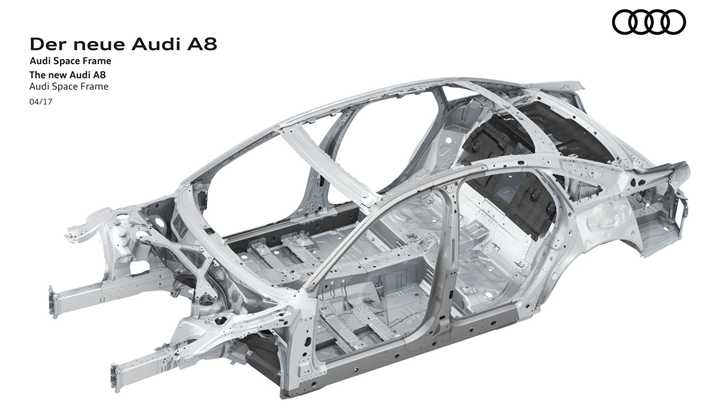
Audi has a principal of using “the right material, in the right place, and in the right amount,” and so things like the rear panel of the car is made of between 6-19 layers of carbon-fibre reinforced polymer. The CFRP consists of 50mm tapes of fibre that are placed individually and layered over and over again, allowing the finished product to absorb longitudinal and transverse loads, as well as protect against shearing force. According to Audi, this is the largest single component in the space frame of the new A8, and contributes to 33% percent to the overall torsional rigidity.
In other parts of the occupant cell, hot-formed steel is used instead. The steel is formed with the material in a semi-solid state, with the heat treatment giving the steel increased strength and lower weight, forming components that can be applied to safety-critical areas of the car. Aluminium makes up for more than half of the new A8’s structure, with over 58% of the SpaceFrame being made of the stuff. Ingolstadt uses heat-treated, ultra-high-strength cast alloys, that boast a tensile strength over 230MPa (megapascal).
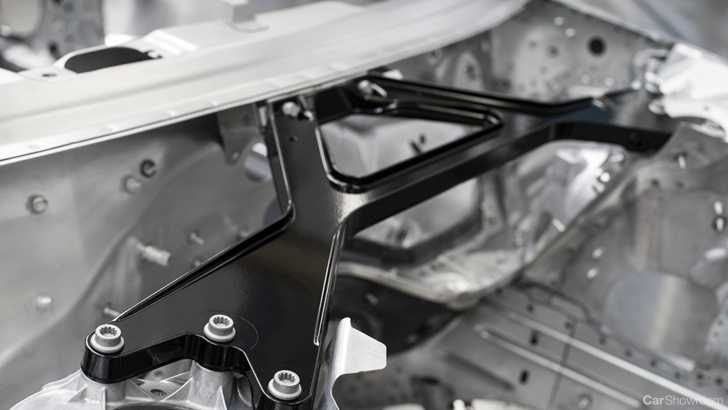
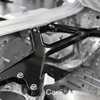
Magnesium is the last of the four materials employed, with the front strut brace alone saving 28% over the outgoing car. This construction aids the overall torsional rigidity even further, while impact forces (from a collision) are absorbed through three impact buffers in the nose.
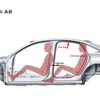
With this extraordinary use of materials, the new A8 will offer improved packaging, with the bulk of the frame minimised in critical places. The standard-wheelbase model will offer no less than 28mm more knee room, while the rear door openings will see a 14mm increase in height and 36mm additional length (at the widest point), which should make ingress and egress easier than before.
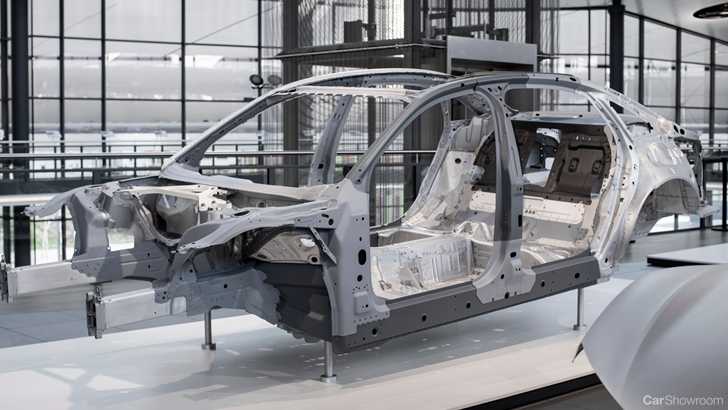
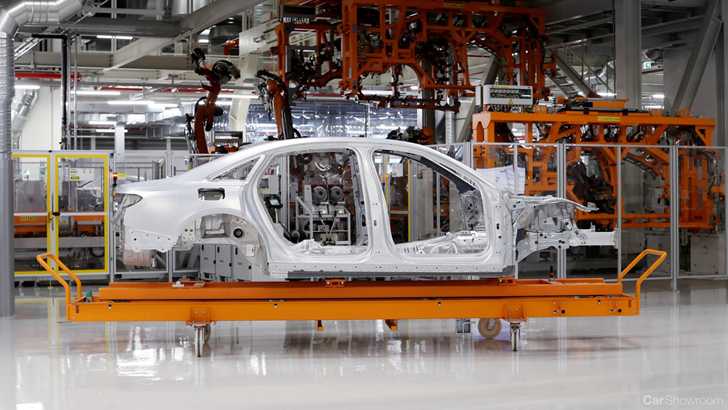
All this wizardry will take place in a brand-new body shop that Audi has constructed in Neckarsulm, Germany just for the flagship model, that will utilise 14 different processes for joining the materials and panels together. “Warm” and “cold” technology will be utilised to construct the trie frame, with remote laser welding used for its accuracy and controlled heat treatment.
For more information on Audi, check out our Showroom.