Audi Crosslane Coupe Plug-In Hybrid Points Next Future Q Models
Audi took centre stage early at the Paris Motor Show when the German giant unveiled the staggering Crosslane Coupe concept car.
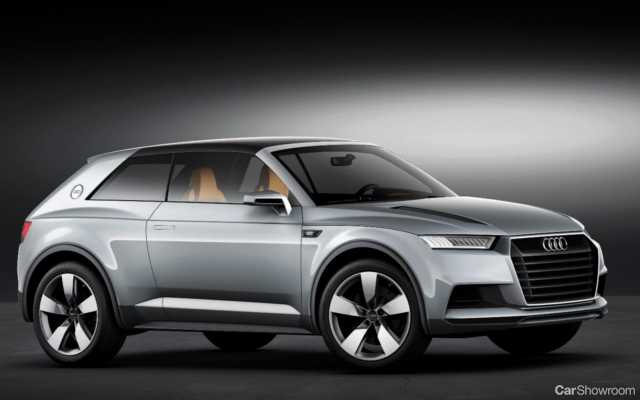
A ‘dual-mode’ hybrid employing a turbocharged 1.5-litre, three-cylinder petrol engine and two electric motors, the Audi Crosslane Coupe concept is said to provide styling cues for the next generation of ‘Q’ model SUVs.
There are several remarkable aspects to the Audi Crosslane Coupe concept and not the least of them is its composition. The lift-off roof coupe is made of aluminium, carbon-fibre-reinforced polymer (CFP) and fiberglass to weigh-in at just 1,390kgs (impressive for a hybrid with a large lithium-ion battery).
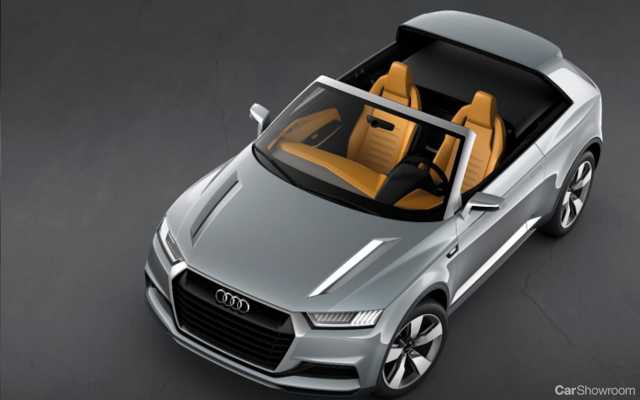
And here’s another bit of complexity. Aluminium is obviously used for strength and Audi actually uses the front grille (made from aluminium) as more than just a coolk air duct, it’s actually a supporting structure, supporting beams which run rearwards to the passenger cell.
Super-strong carbon fibre-reinforced polymer is used in the front and rear crash structures.
Power comes from the two electric motors with ‘system power’ of 130kW. The purpose-built 1.5-litre, three-cylinder TFSI petrol engine is good for 95kW/200Nm and is coupled to a 50kW/210Nm electric motor used as starter/generator while the second electric motor delivers 85kW/250Nm. Incredibly, a claw-clutch enables the combustion engine and alternator to the drivetrain.
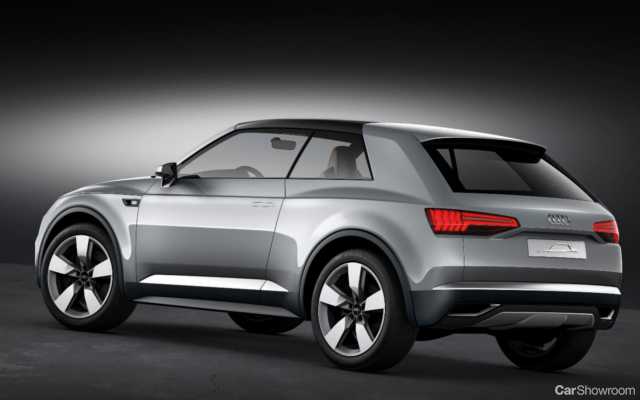
All of that propels the Audi Crosslane Coupe from zero to 100km/h in 8.6 seconds (when combined with the three-cylinder petrol engine) or in 9.8 seconds as a pure electric car. Audi says on pure electric power, the Crosslane Coupe has a top speed of 130km/h and range between re-charges of about 86kms.
Looks are certainly engaging and powerful – good news if this is the future of the Audi Q range – highlighted by the flat C-pillars. A brilliant innovation is the boot which is a separate box attached to panels behind the rear seats in the 2+2 coupe and which slides forward electronically to allow the roof to open.
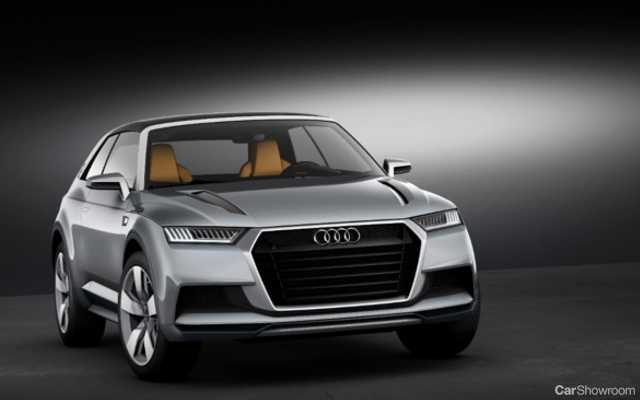
Inside, the geometric interior uses lots of carbon-fibre for a sporty look.


