While the likes of Australia’s NCAP and Euro NCAP capture headlines crashing the latest model cars, the reality is automotive engineers throughout the world daily crash significantly higher numbers of cars in their relentless pursuit of safety – but they don’t invite TV news crews to their tests.
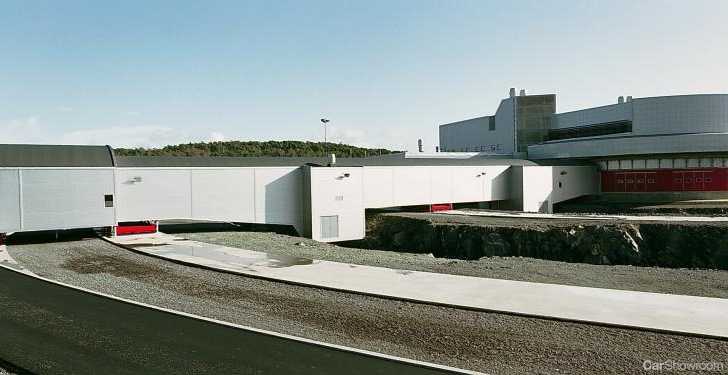
Swedish manufacturer Volvo is a prime example. The company’s world-leading crash test facility in Sweden turns 10 years old this year and in that time some 3,000 full-scale crash tests have been completed.
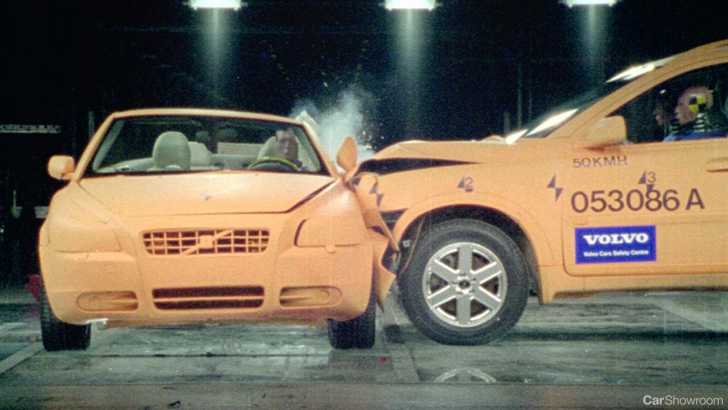
The state-of-the-art facility has the capacity to complete more than 400 full-scale crash tests per year.
Volvo says findings from those decade-long crash tests have been used to reduce the risk of being involved in a crash or being injured in a Volvo car by more than 50 per cent.
“We can replicate most of the incident and accident scenarios that take place out on the roads. By analyzing these and then testing new safety technology in the crash-test laboratory, we can improve the safety level in our cars so that they become even safer in real-life traffic conditions,” explained Thomas Broberg, senior safety advisor at Volvo Cars Sweden.
Volvo’s facility boasts two test tracks – one fixed and one movable. The movable test track can be adjusted in a range of 90 degrees, making it possible to undertake tests involving two vehicles colliding at different angles – not just the usual front, side or rear impacts.
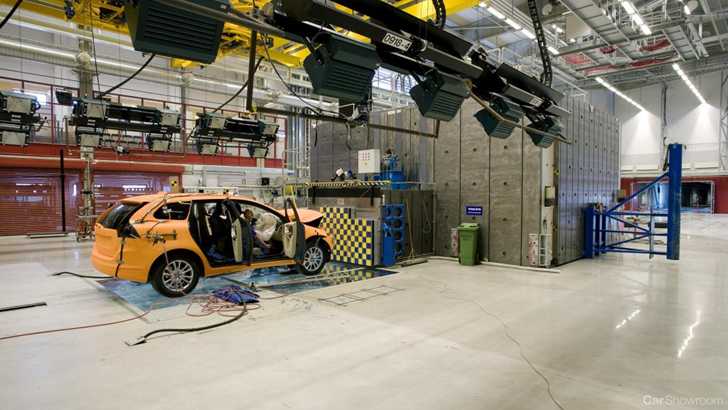
At the end of the fixed track is a concrete slab used for rollover tests and tests involving avoidance or reducing the impact in a crash. Volvo has 100 crash test dummies to represent men, women and children of different sizes, weights and ages.
Volvo has 20 different barriers used for testing – replicating the various barriers found on roads throughout the world.
In 2008, Volvo installed a set of the latest-generation digital high-speed cameras – they film impacts at 200,000 frames per second - and a new test rig with a plexiglass floor capable of filming a car from below when it hits a light pole or tree. All-up the facility has 50 high-speed cameras.
“The degree of precision in a test in which two moving cars collide at 50 km/h is 2.5 centimetres. This corresponds to two thousandths of a second. By way of comparison, a blink of the human eye takes about 60 thousandths of a second. This says a whole lot about the laboratory’s precision,” Mr Broberg said.
Even before a new model is crash tested in the center’s real-life scenarios, engineers will have completed thousands of computer-simulated crashes as part of standard new model development procedures.


