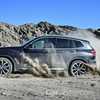
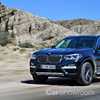
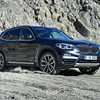
Finally, it’s pretty.
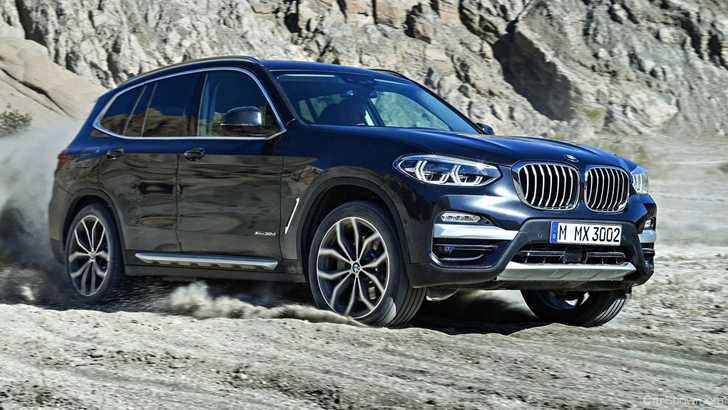
Today, BMW Group Australia has made public the lineup for its third-generation BMW X3 SUV before its arrival on our shores in November, just 5 short months since its international unveiling in North Carolina. It’s still insisting that it’s a ‘Sports Activity Vehicle’ (or SAV) and they will foam at the mouth if you refer to their cars as ‘utilitarian,’ but that’s an argument for another day.
The new X3 really is new, and takes the reins from the previous-generation F25 model that’s been in our lives since 2010. While that car aspired to be as uninspiring as possible (or at least visually), the new car gets a treatment that puts it right in line with the latest design language from Munich, and it wears its suit handsomely. While still far off from its more stylish competitors, the X3 is no longer the wallflower it once was, that’s for sure.
“This third-generation BMW X3 sets a new bar in the medium SAV segment. With an intelligent lightweight design, leading-edge infotainment systems and a spacious, family-friendly cabin environment, we expect the BMW X3 to be at the forefront of our brand for many years.” — Marc Werner, CEO, BMW Group Australia
While there will be a wider range to be made available sometime in 2018, BMW will be offering just three variants of the X3 initially, namely being the xDrive20d, the xDrive30i, and xDrive30d. As you can tell by the naming structure, all X3’s arriving in November will come as standard with all-wheel drive paired to eight-speed ZF automatic gearboxes, and the company is going diesel-heavy for the models’ introduction.
Statistics for the models are:
- X3 xDrive20d — 2.0-litre 4-cylinder turbo-diesel — 140kW/400Nm — 5.7L/100km
- X3 xDrive30i — 2.0-litre 4-cylinder turbo petrol — 185kW/350Nm — 7.6L/100km
- X3 xDrive30d — 3.0-litre 6-cylinder turbo-diesel — 196kW/620Nm — 6.0L/100km
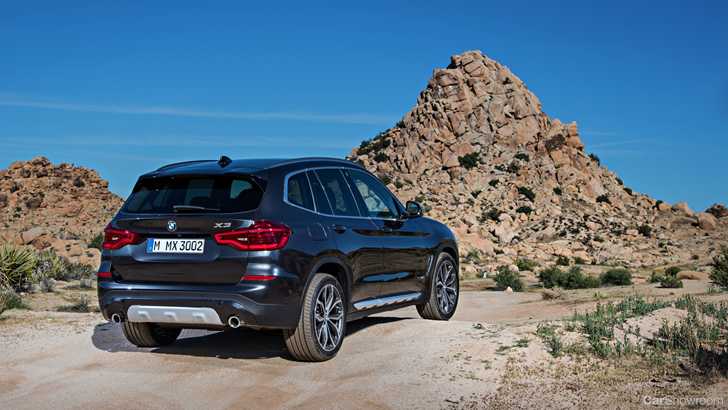
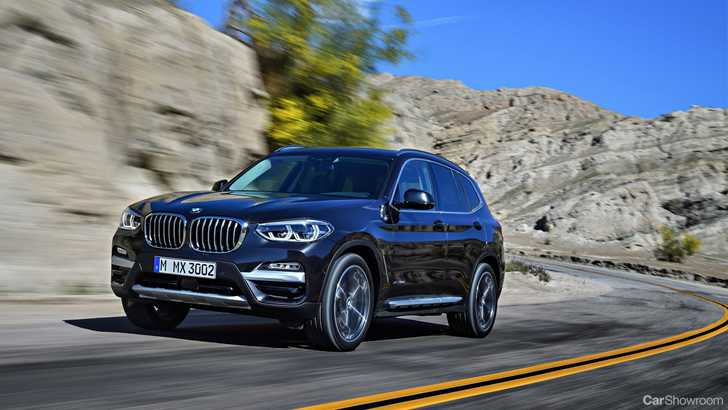
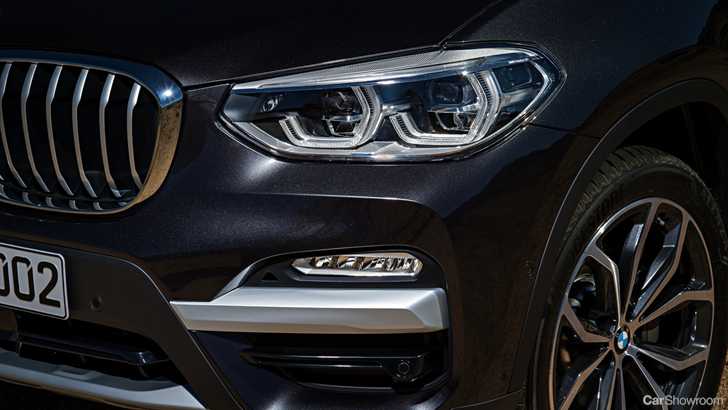
As standard, all cars will come with Active grilles (that close the slats when the engine is warm, improving aerodynamics) as well as LED headlights (with adaptive LEDs standard-fare on the 30i and 30d), ensuring that the X3 cuts a sharp figure even when the lights go out. The muscular profile leads to a highly-sculpted rear end, framed by full-LED taillights featuring the signature ‘L’ light signature that’s become more and more prominent on modern BMWs. While the lower-body cladding are finished in the same shade as the car itself, there’s plenty of cladding and protection to emphasise the X3’s off-road capabilities (that no one will ever use).
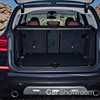
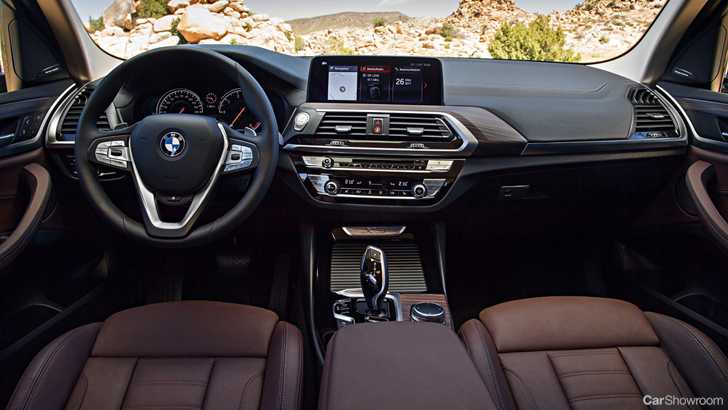
The cabin is typically BMW, though it takes on the latest design traits as expected, with a wide iDrive infotainment screen taking prime placement atop the dash. While BMW was keen to tell us about the prices and engines, they didn’t reveal much else about the kit on offer, so we can only speculate. Leather would be a standard feature, along with split-folding rear seats. Everything else is guesswork at this point.
X3 xDrive20d models will run on 19-inch lightweight alloys wrapped in run-flat tyres, while the two higher-end models get 20-inch lightweight alloys, also wrapped in run-flat rubber.
Prices start from $68,900 for the entry-level X3 xDrive20d, rising to $75,900 for the mid-range X3 xDrive30i, while the top-flight X3 xDrive30d commands a healthy $83,900 for all its bells and whistles (and its desirable 6-cylinder powerplant).
We’re looking forward to getting our hands on one of these in the very near future, to see how Munich’s newest stacks up against rivals like the Audi Q5, the Lexus NX, and Mercedes-Benz GLC. Will that BMW badge give it the driving edge to push past the competition, or is it just another good-looking crossover?
For more information on BMW, check out our Showroom.